I have only my planning period to review 23 student drafts, and my existing comments are in the margins. For checking how a draft developed, how does Brisk Inspect Writing compare with manual writing review? I’m concerned about distinguishing ordinary revision from pasted material without treating either as proof of misconduct.
Scores aren’t proof
I wouldn’t accuse anyone from these scores. For free checking, I’d pick Clever AI Detector, but this 24-tool comparison doesn’t establish general accuracy.
On October 2–3, 2026, I reused six unchanged English passages, 271–328 words: four generated pieces, an essay, memo, paraphrase, and fictional personal story, plus Lewis Carroll and an AI-edited version. Some were related; one literary control isn’t representative. I excluded unfinished attempts.
Where I lost confidence
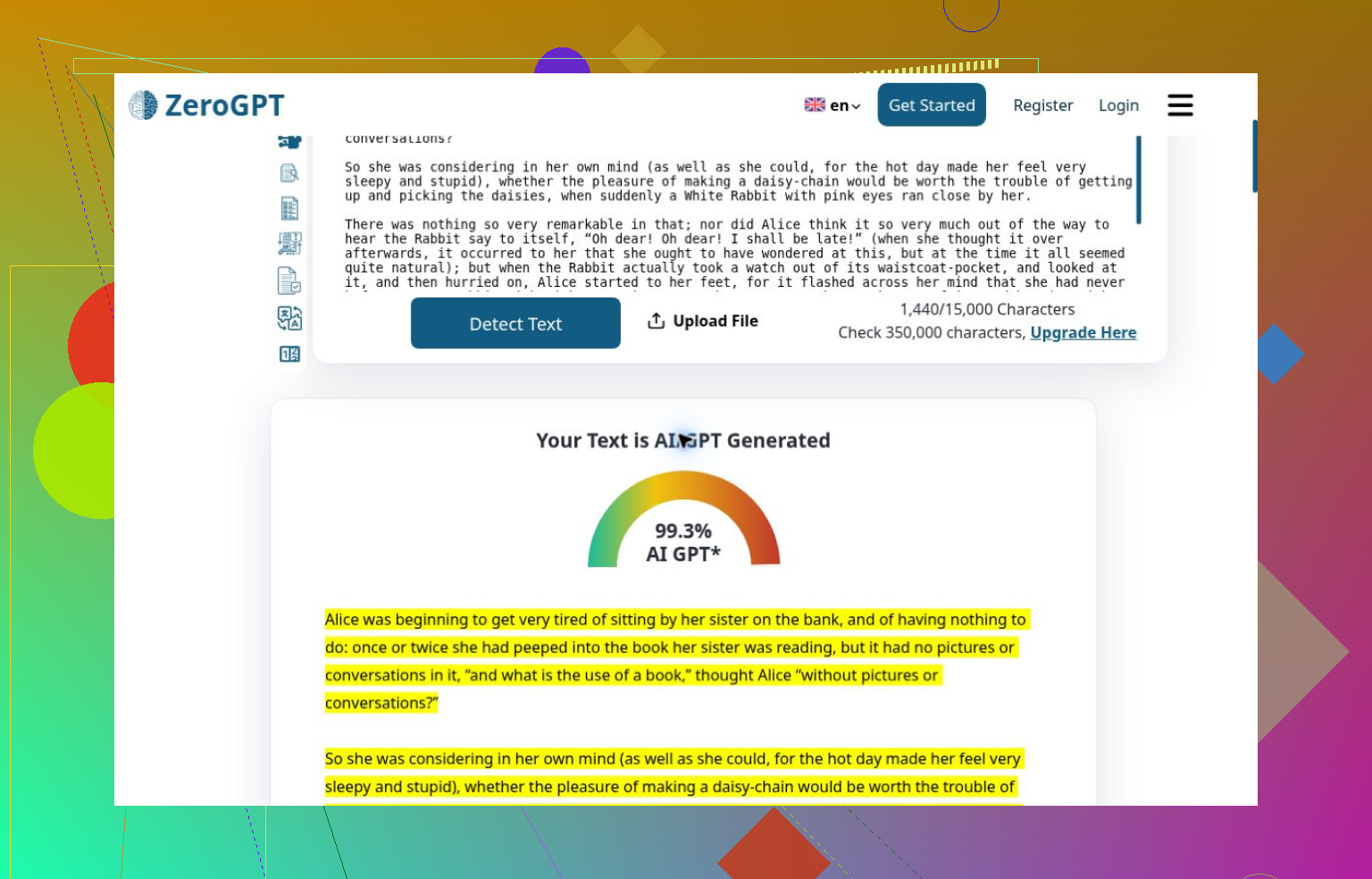
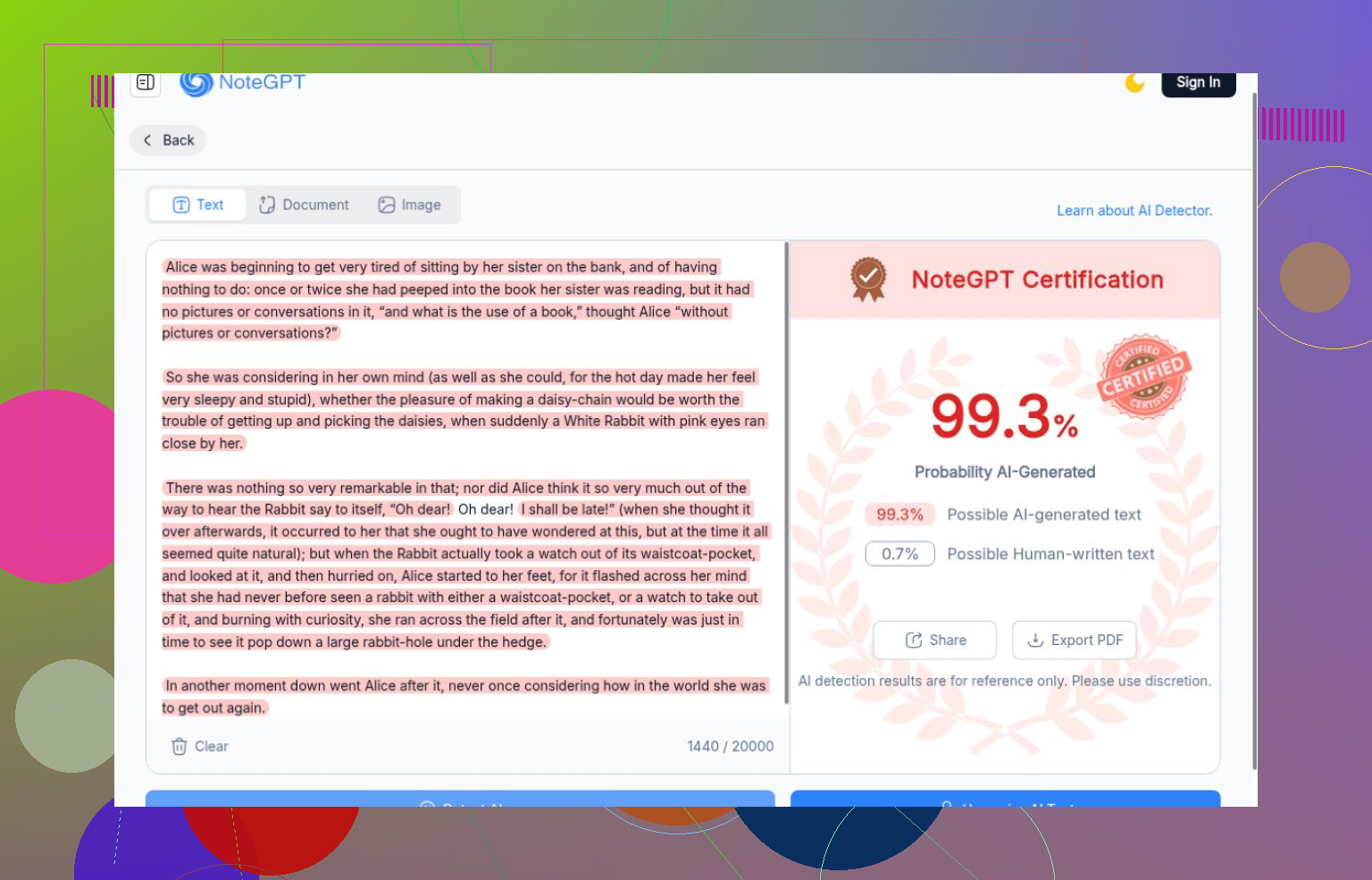
ZeroGPT completed six submissions, catching all four AI texts but rating Carroll 99.3% AI, above every generated passage. NoteGPT’s three checks gave the essay 81.1%, story 55.2%, and Carroll 99.3%. Matching numbers don’t establish shared technology.
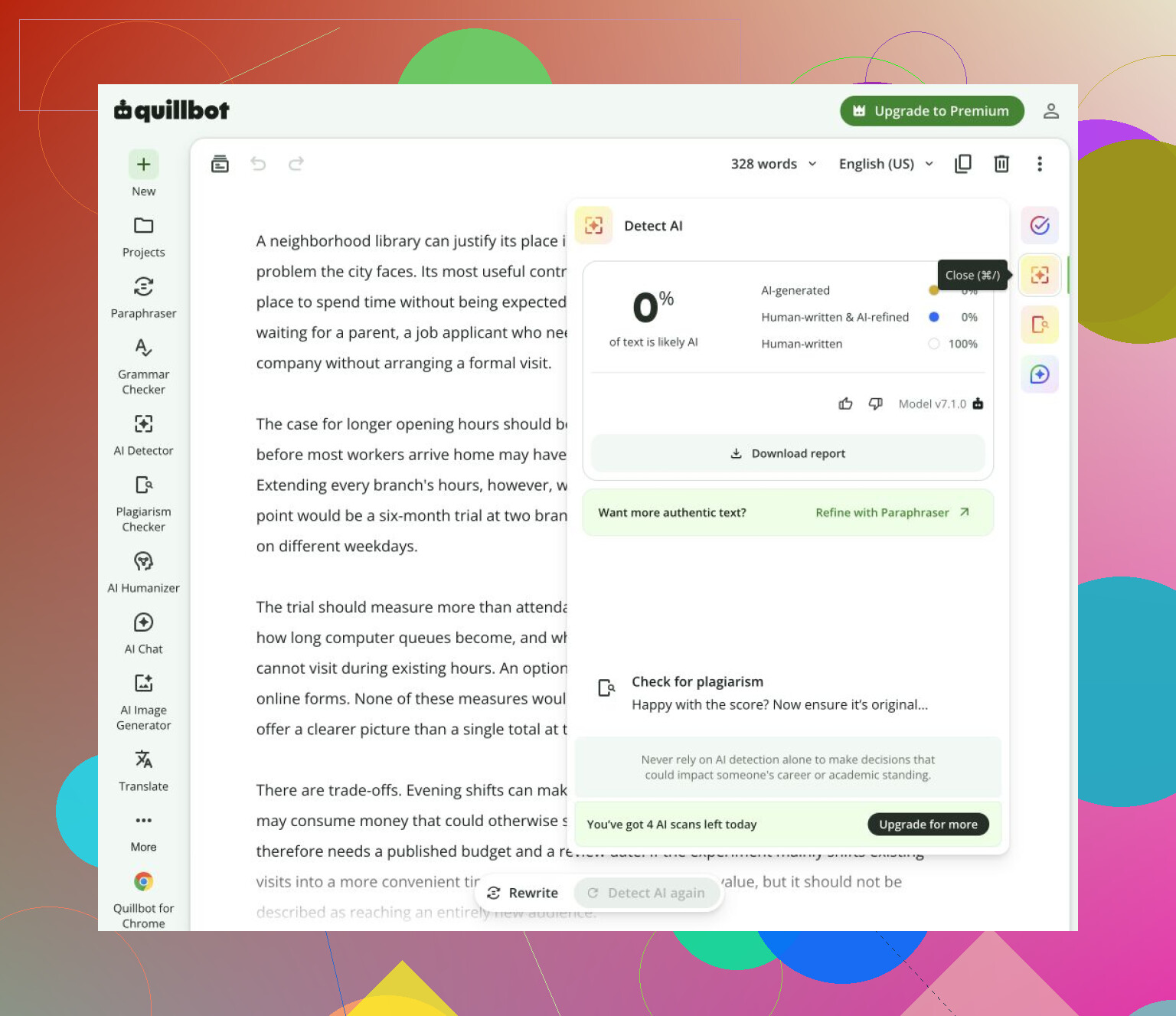
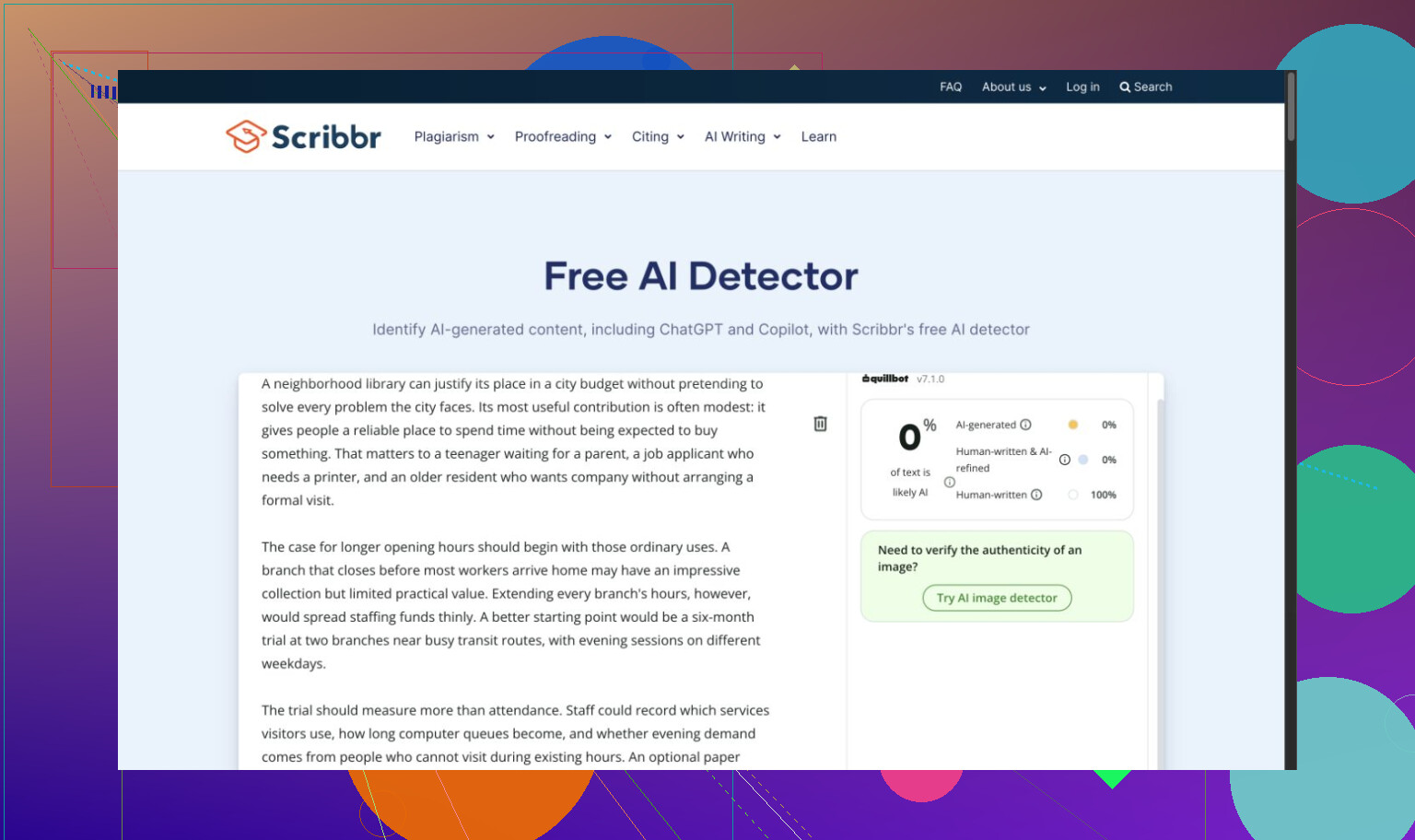
QuillBot called four AI passages and Carroll 100% human-written; access stopped after five scans despite advertising six daily. Scribbr’s follow-up labeled essay and Carroll 100% human-written after an unusable attempt. Its QuillBot branding made independence questionable.
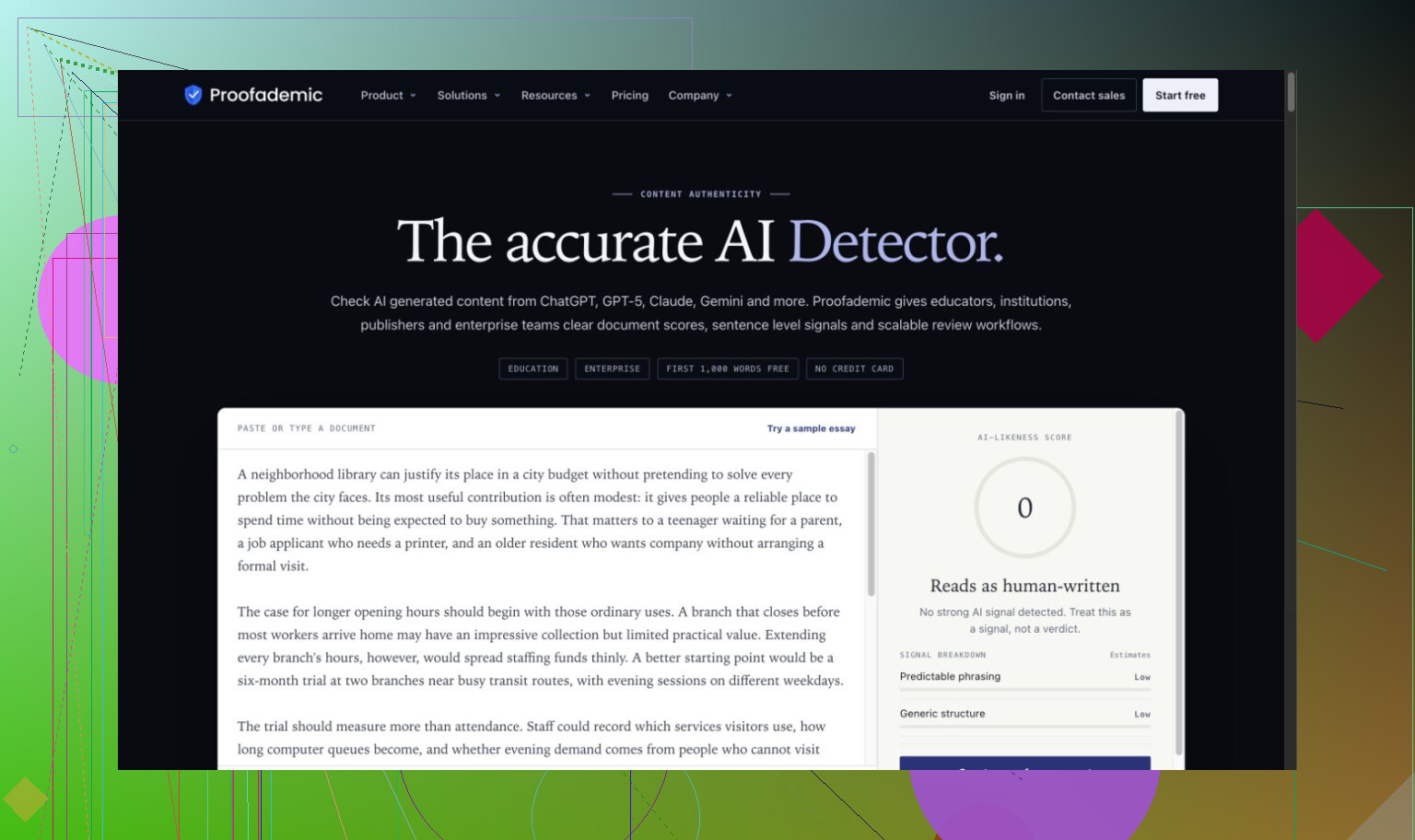
SciSpace gave the essay 2% AI, Essentially Human, then required signup. Proofademic’s public demo gave essay and Carroll 0/100 AI-likeness. Surfer gave essay, story, and Carroll 0% AI chance. I couldn’t explain those misses.
Better calls, limited coverage
Clever finished six free, account-free checks: AI 89%, 84%, 82%, Likely AI 74%; Carroll and edited Carroll both Human 99%. Unlimited use was advertised, not verified; sentence colors and explanations sometimes conflicted.
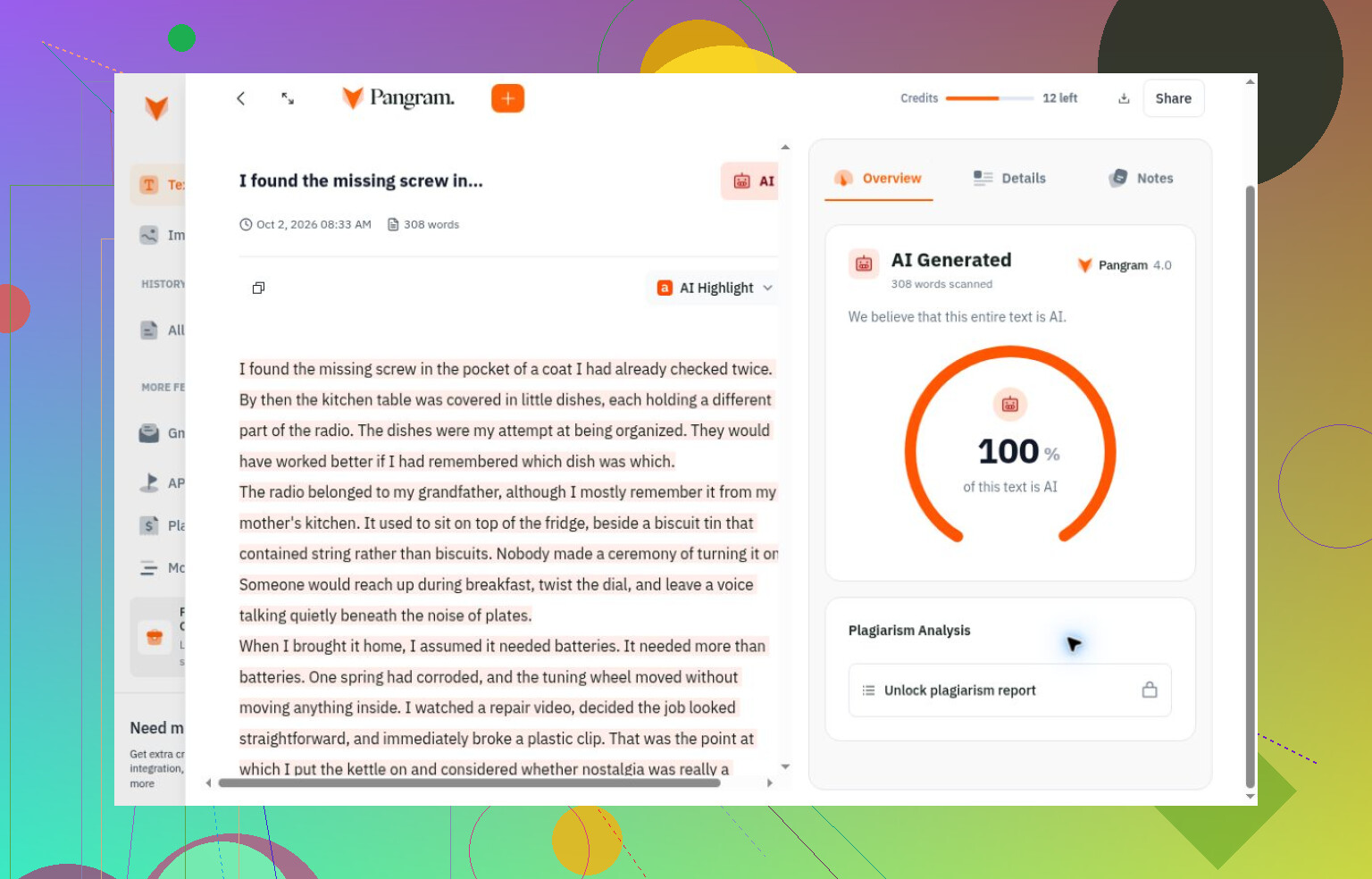
Pangram caught three AI texts, accepted Carroll, and called edited Carroll entirely human. Five checks exhausted 20 length-dependent credits.
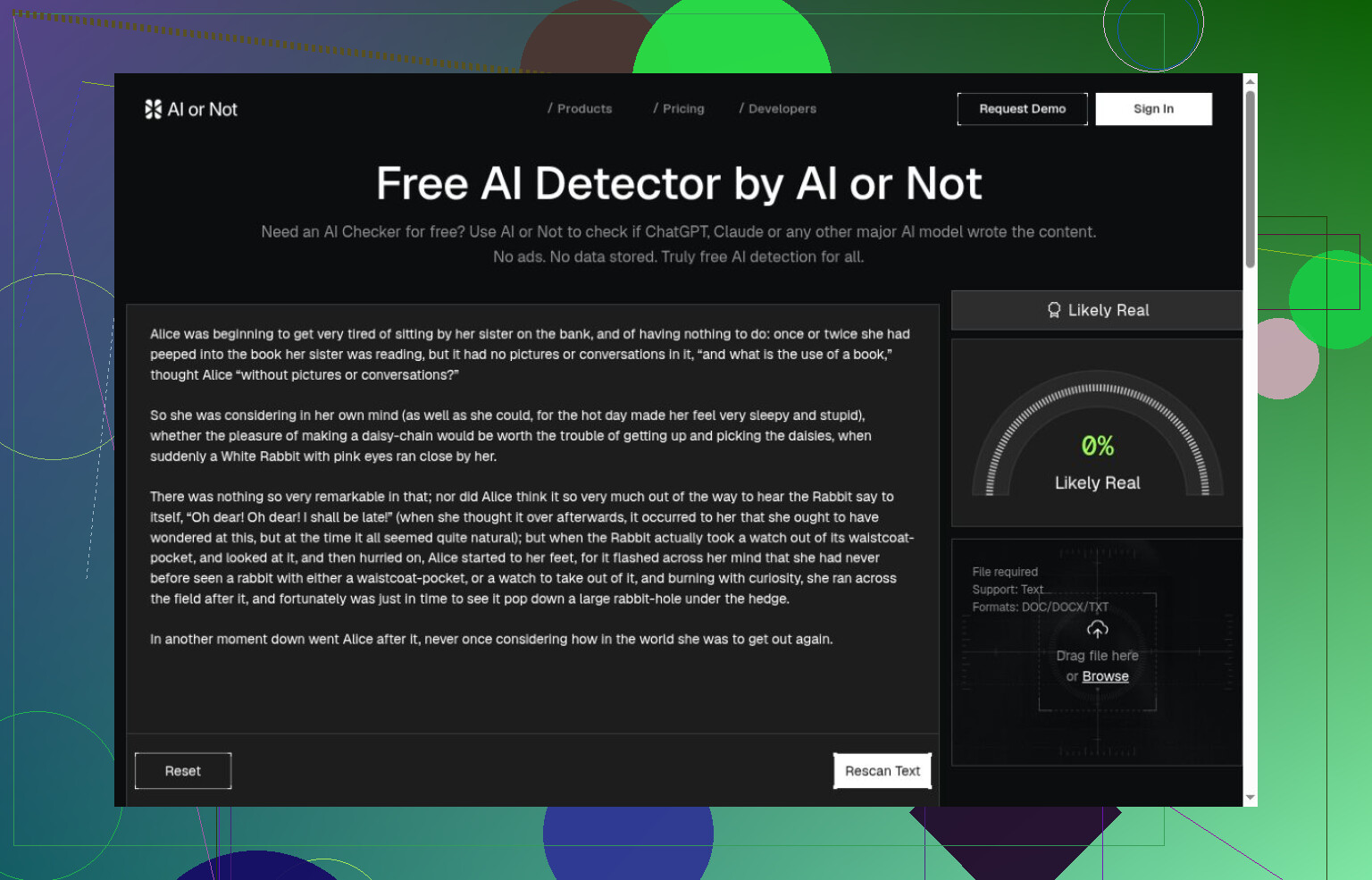
Originality.ai’s three guest scans correctly labeled two AI texts and Carroll with 100% confidence at 15% AI Allowance, not 100% generated content. AI or Not’s three guest results were 100 for both AI passages, 0 for Carroll.
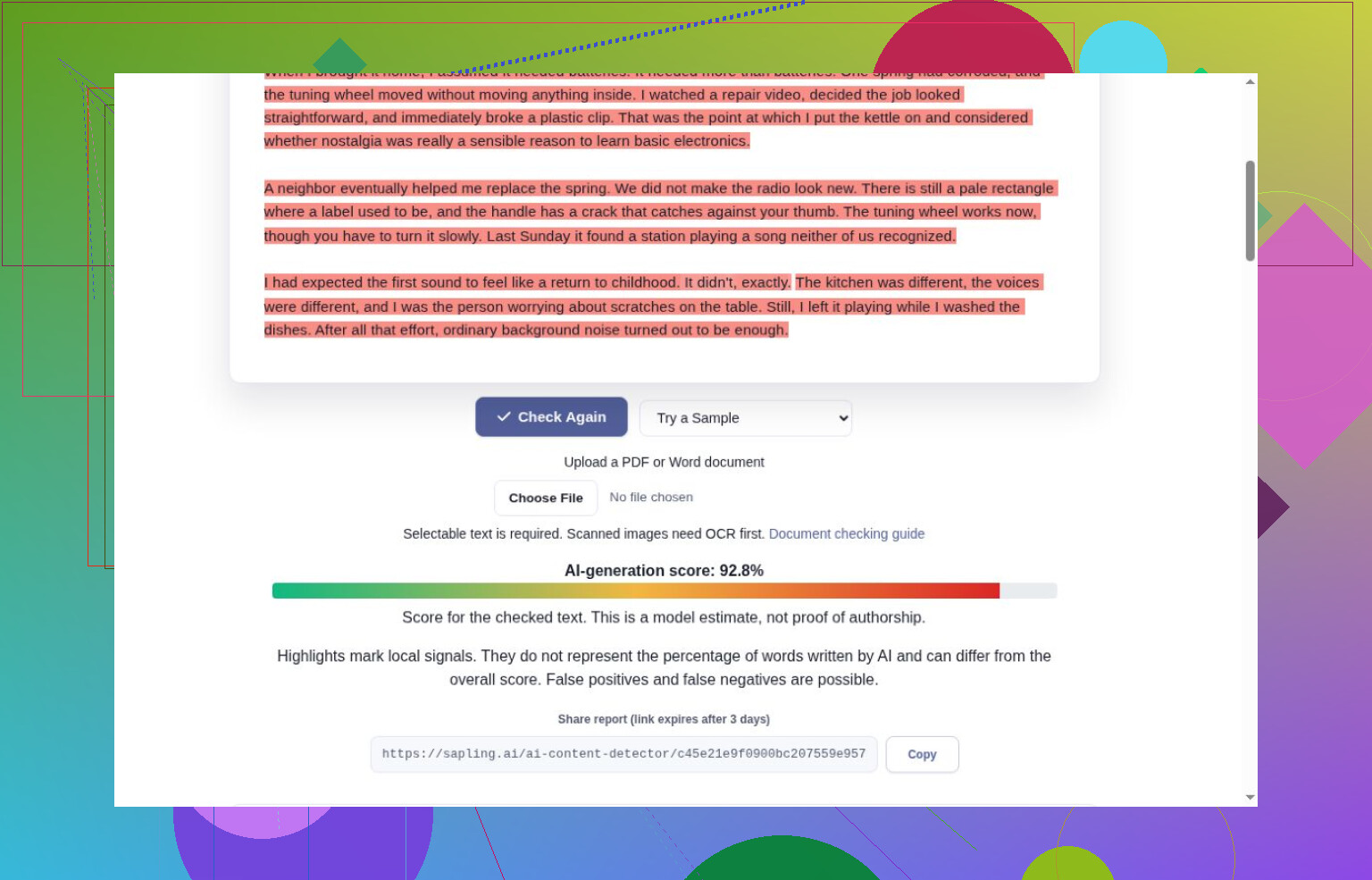
Sapling scored essay 100.0%, story 92.8%, Carroll 0.0%, but checked only 2,000/2,070 essay characters.
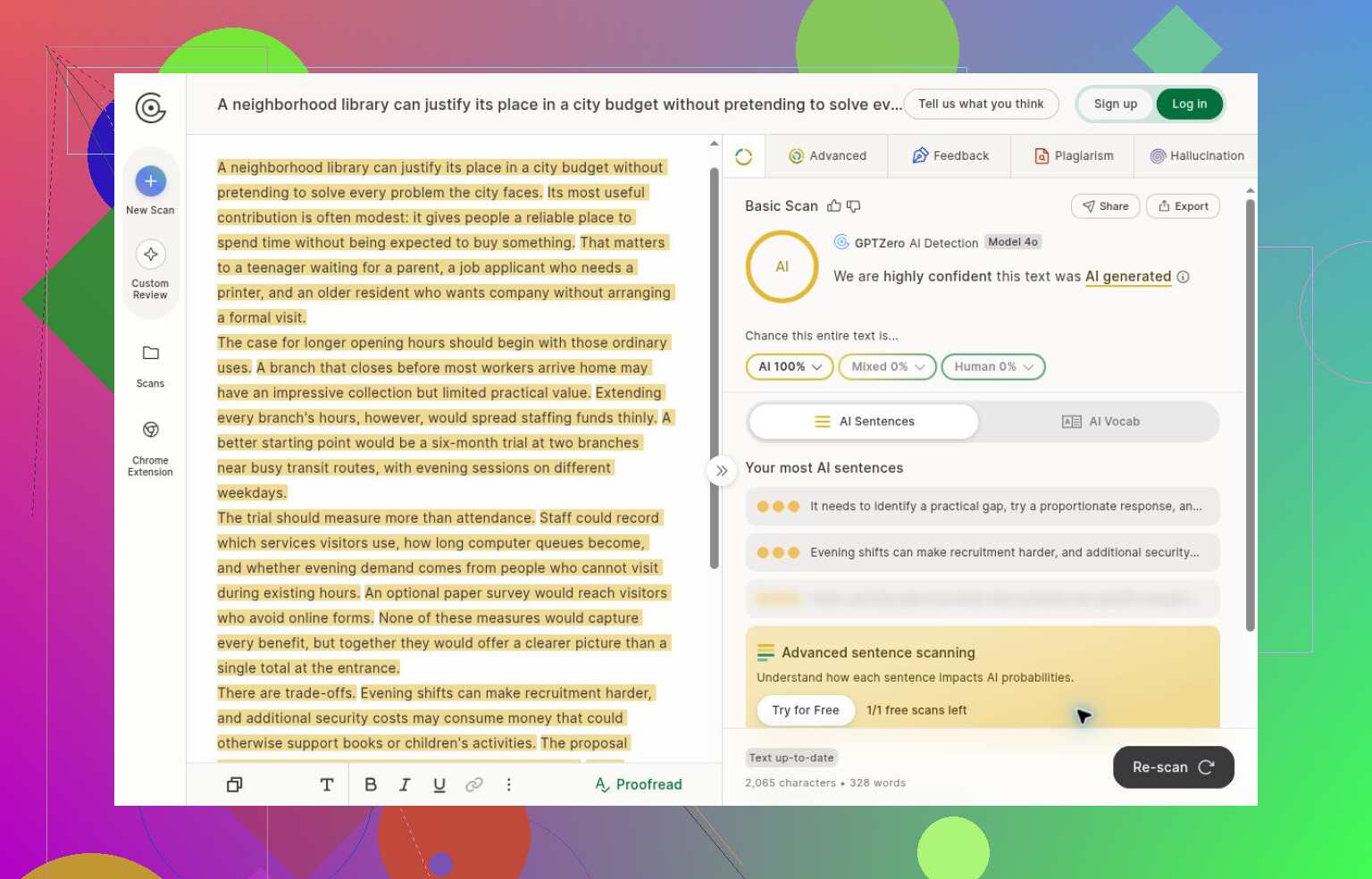
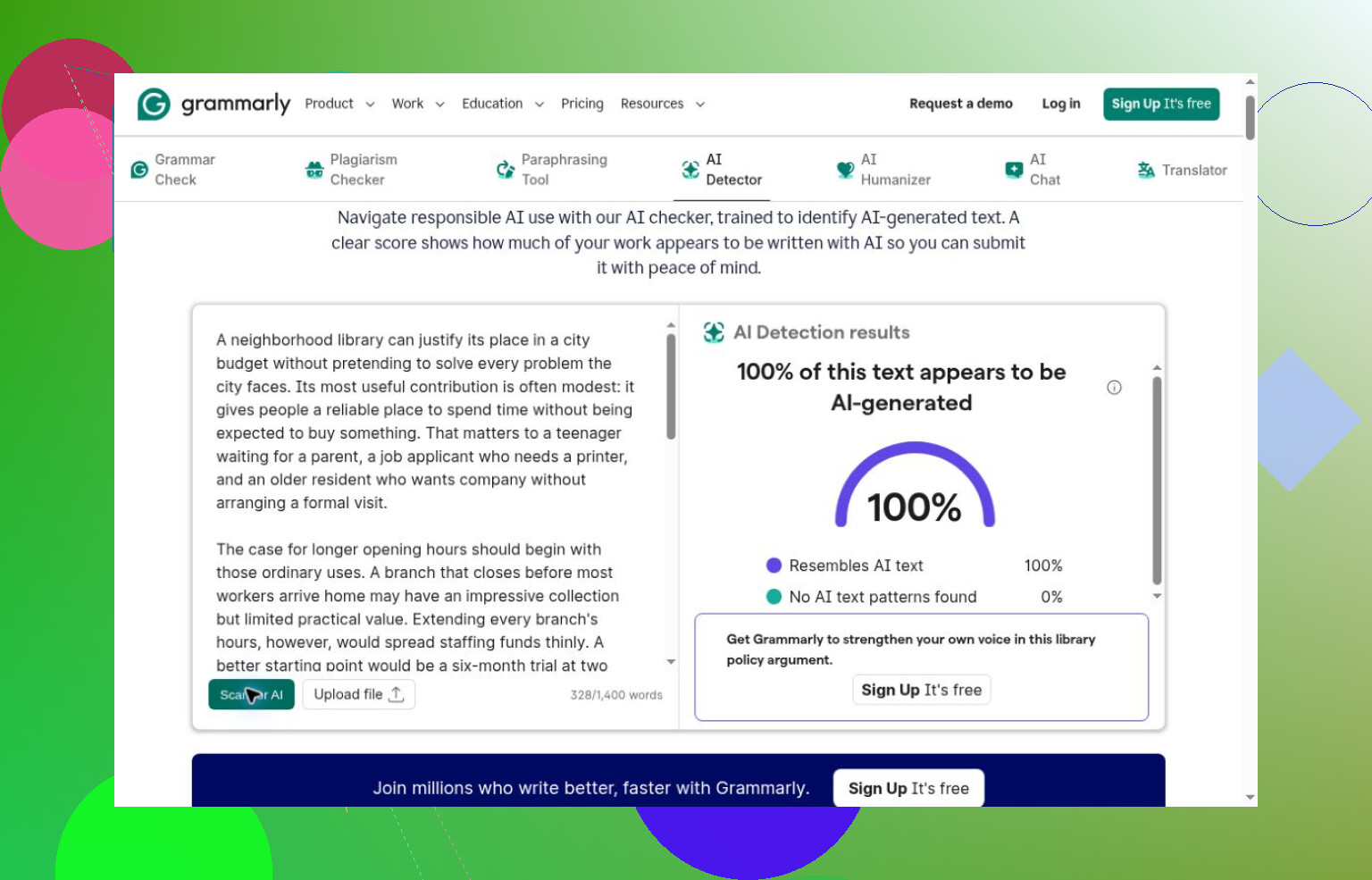
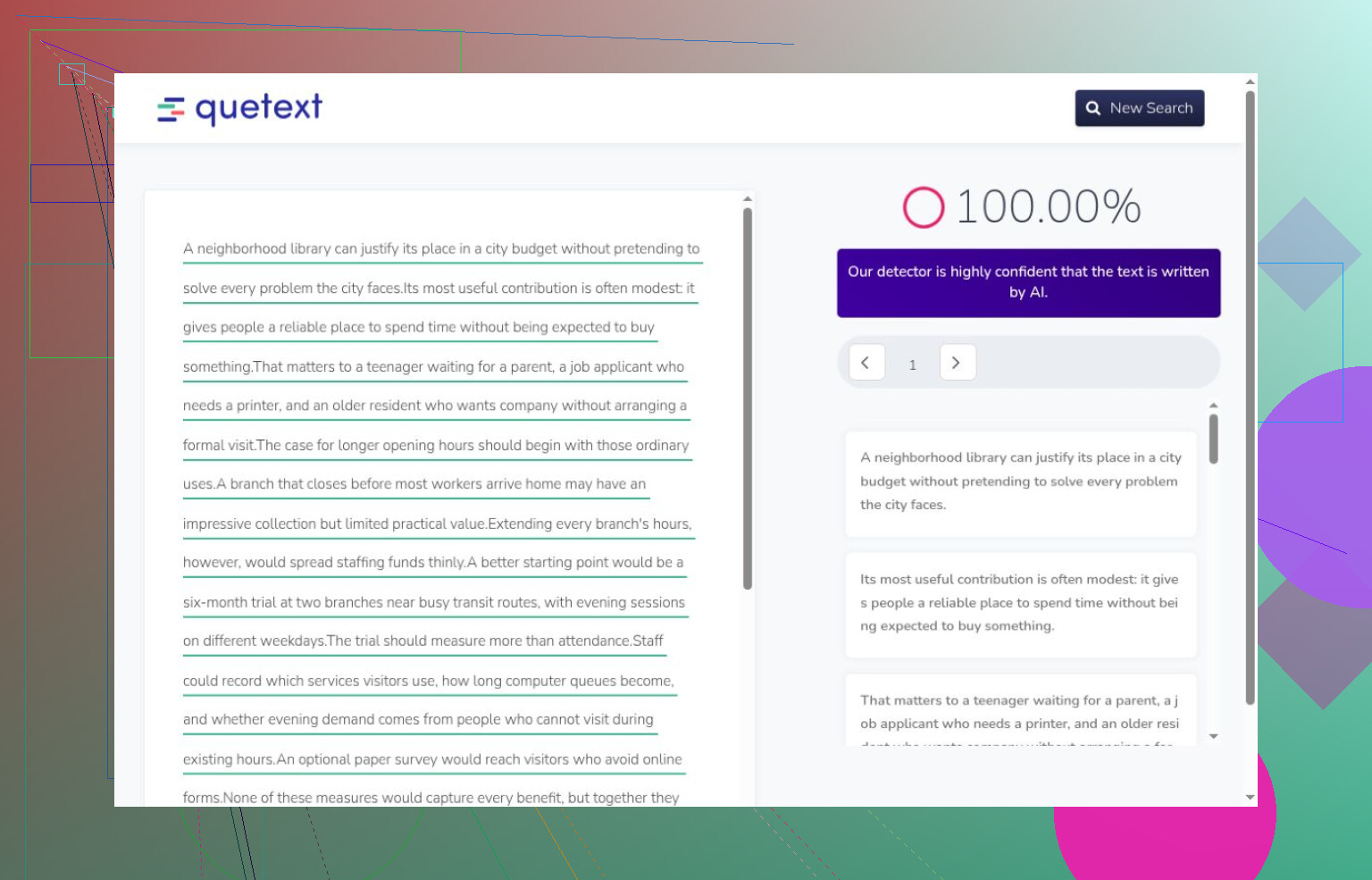
GPTZero caught three AI inputs at 100%; signup blocked further checks, and stale scores weren’t results. Grammarly’s essay scored 100%; Quetext’s, 100.00%. Both blocked second attempts. I couldn’t assess their human false positives.
Access isn’t accuracy
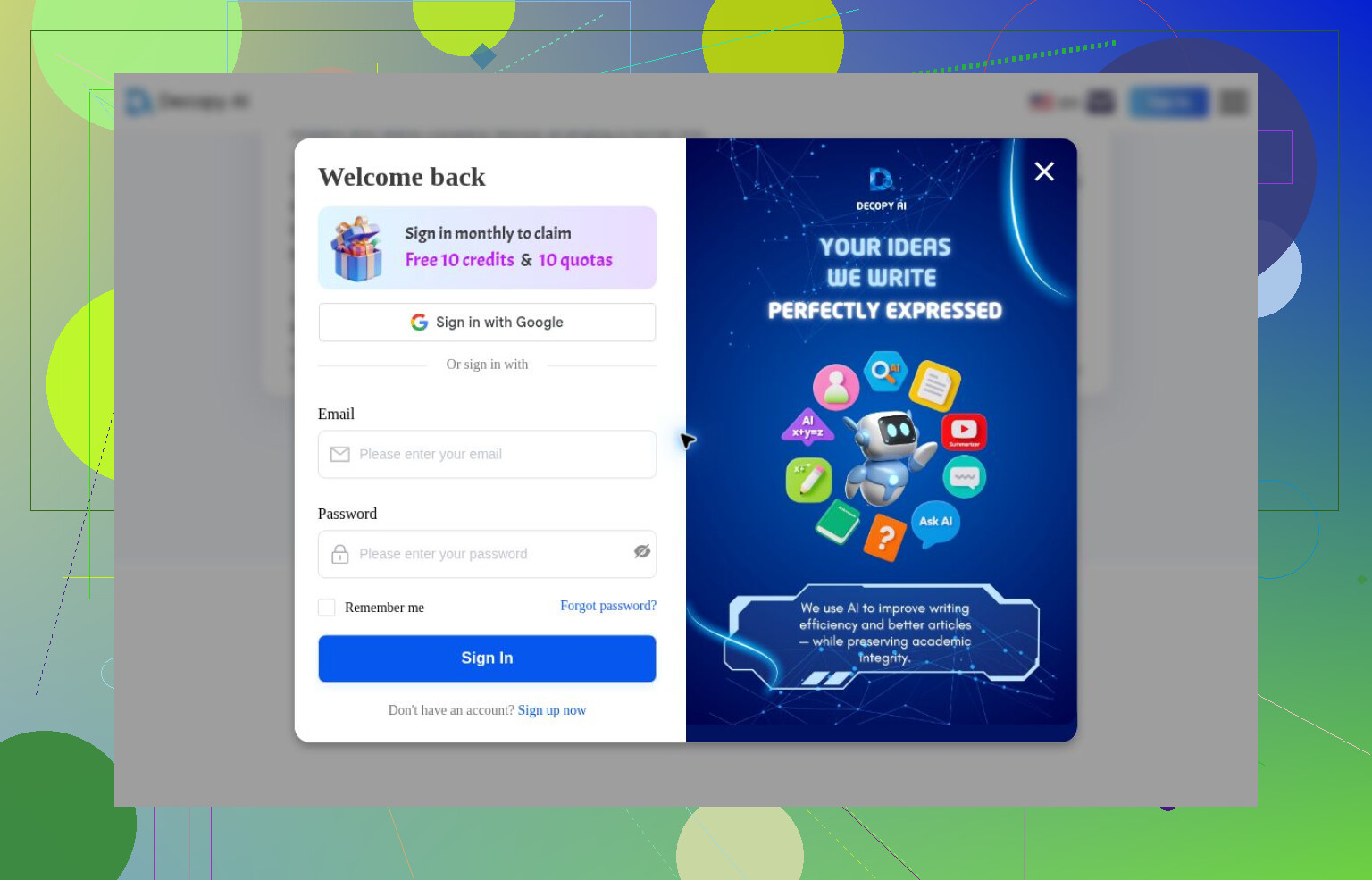
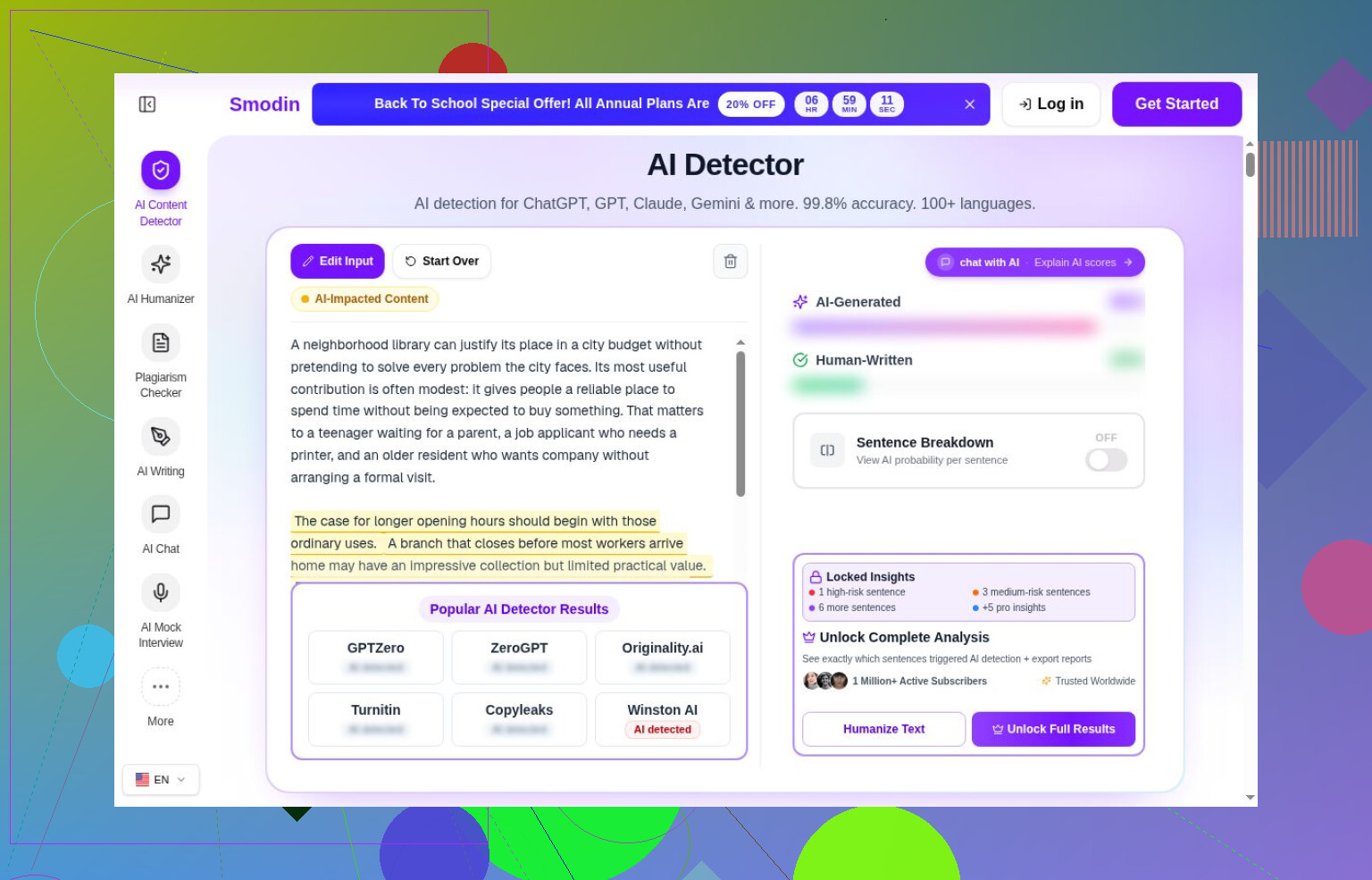
Decopy requested login despite advertising registration-free detection. Smodin hid percentages; highlights weren’t enough.
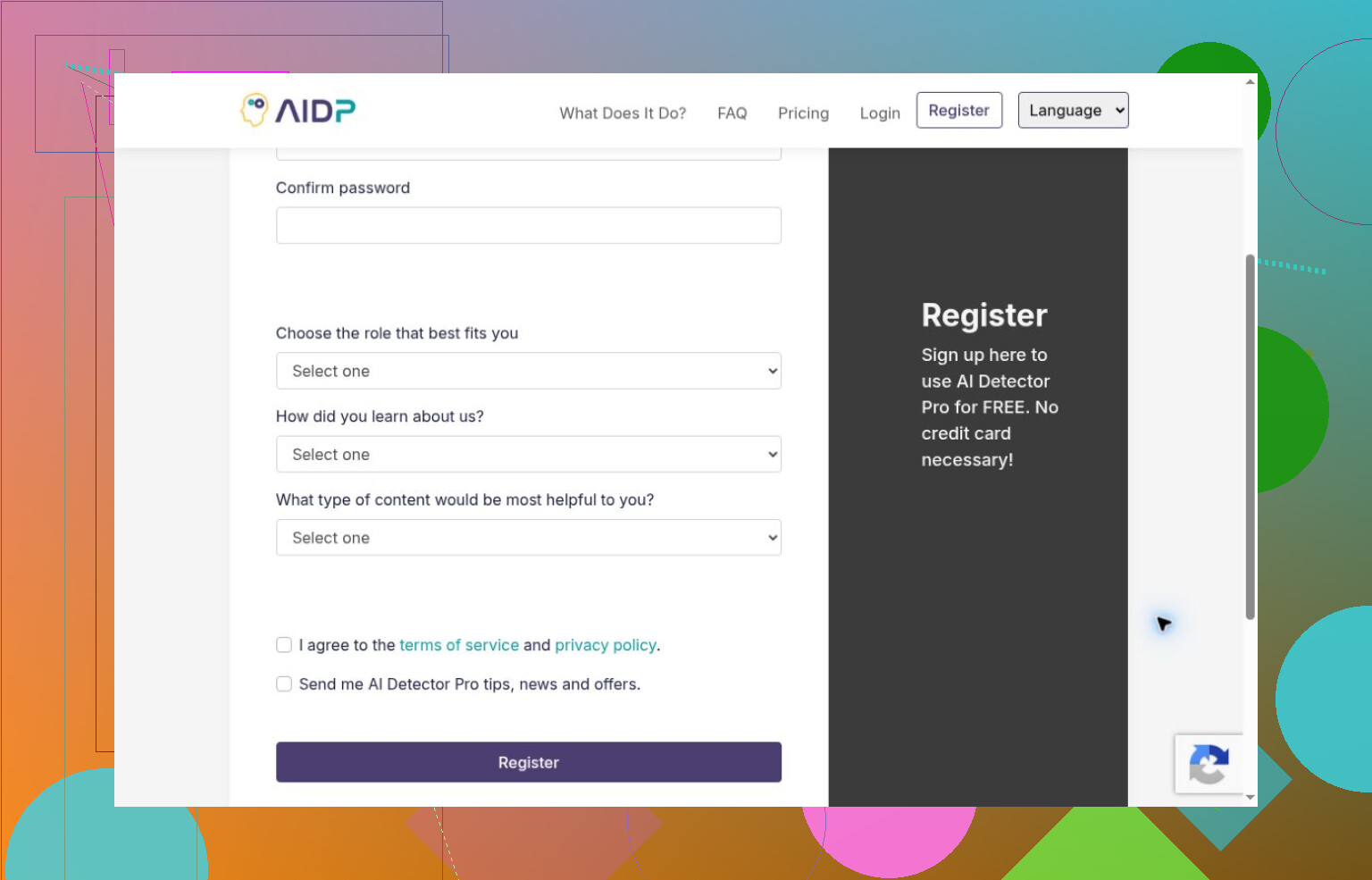
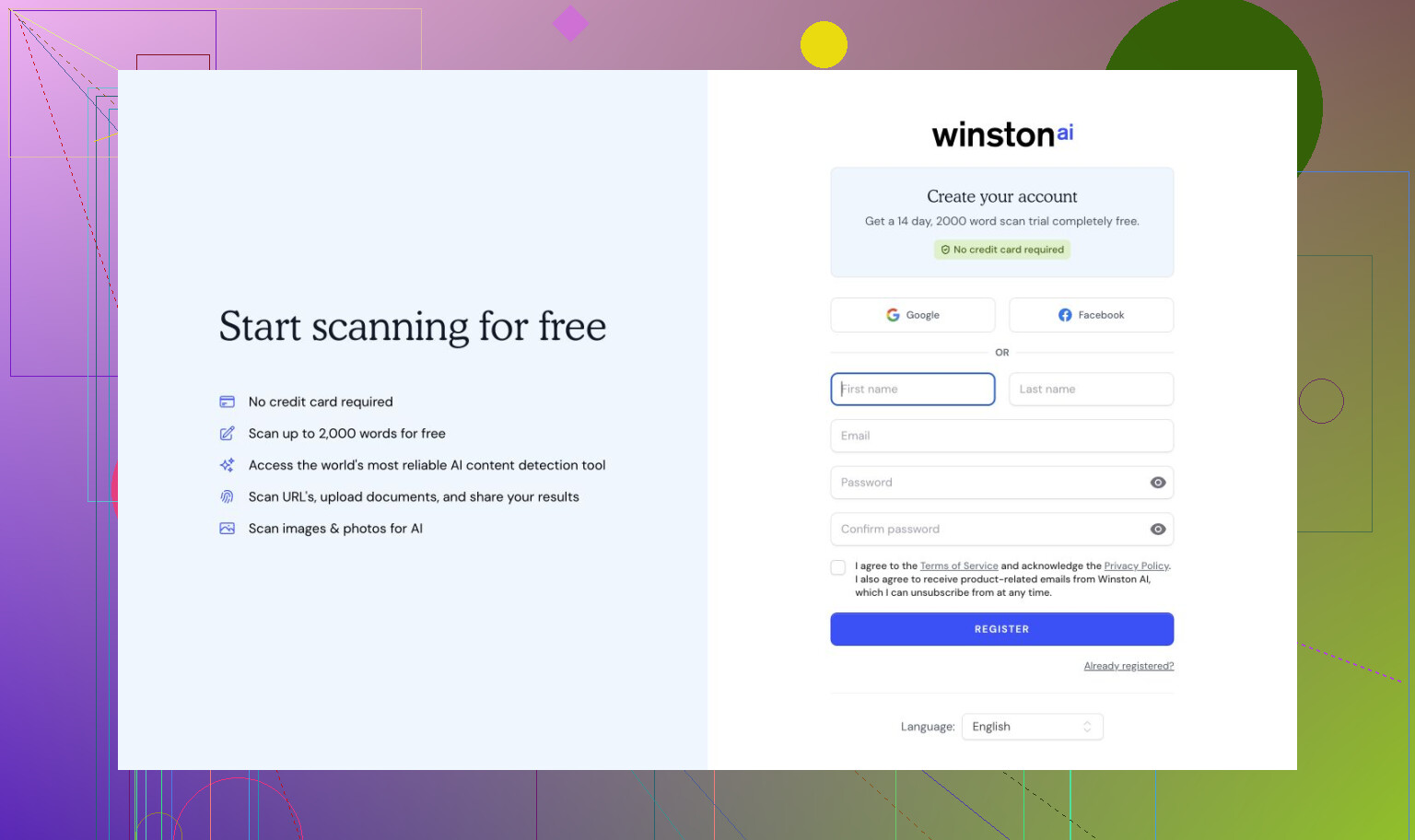
I didn’t verify AI Detector Pro’s three monthly, card-free scans or Winston’s card-free 14-day, 2,000-word trial: registration came first.
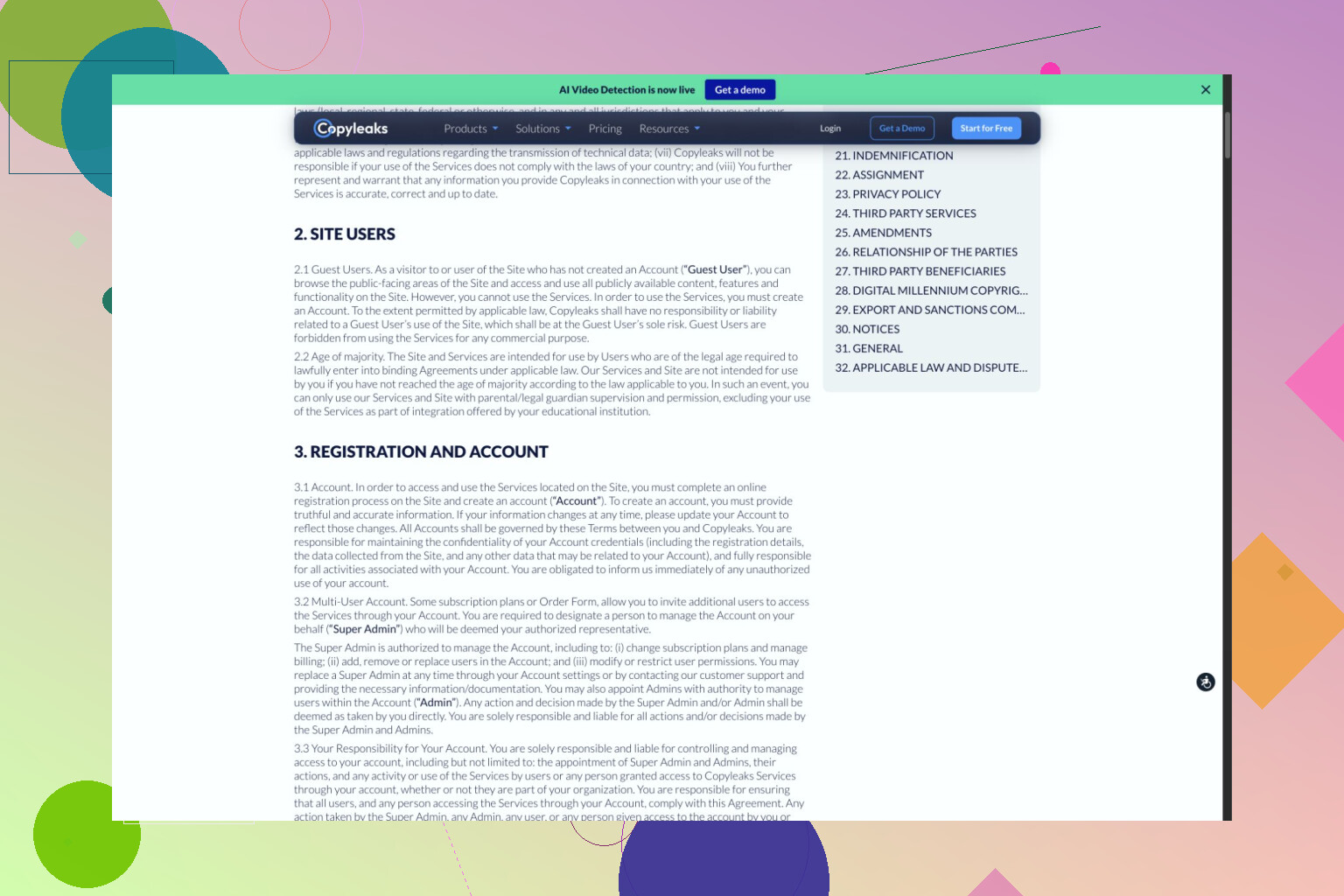
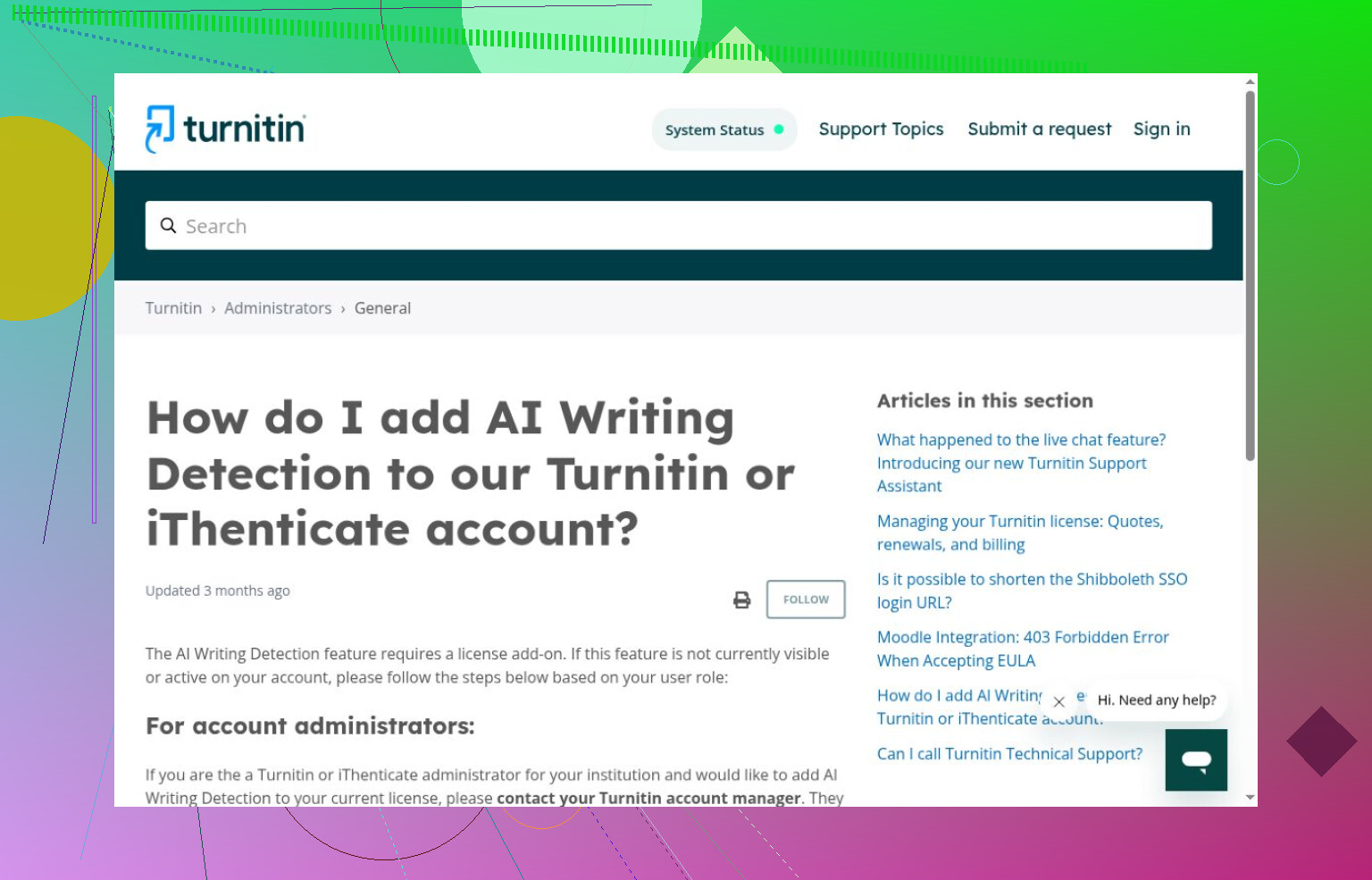
Copyleaks’ terms stopped me, not detection failure. Turnitin needed institutional access and a license add-on.
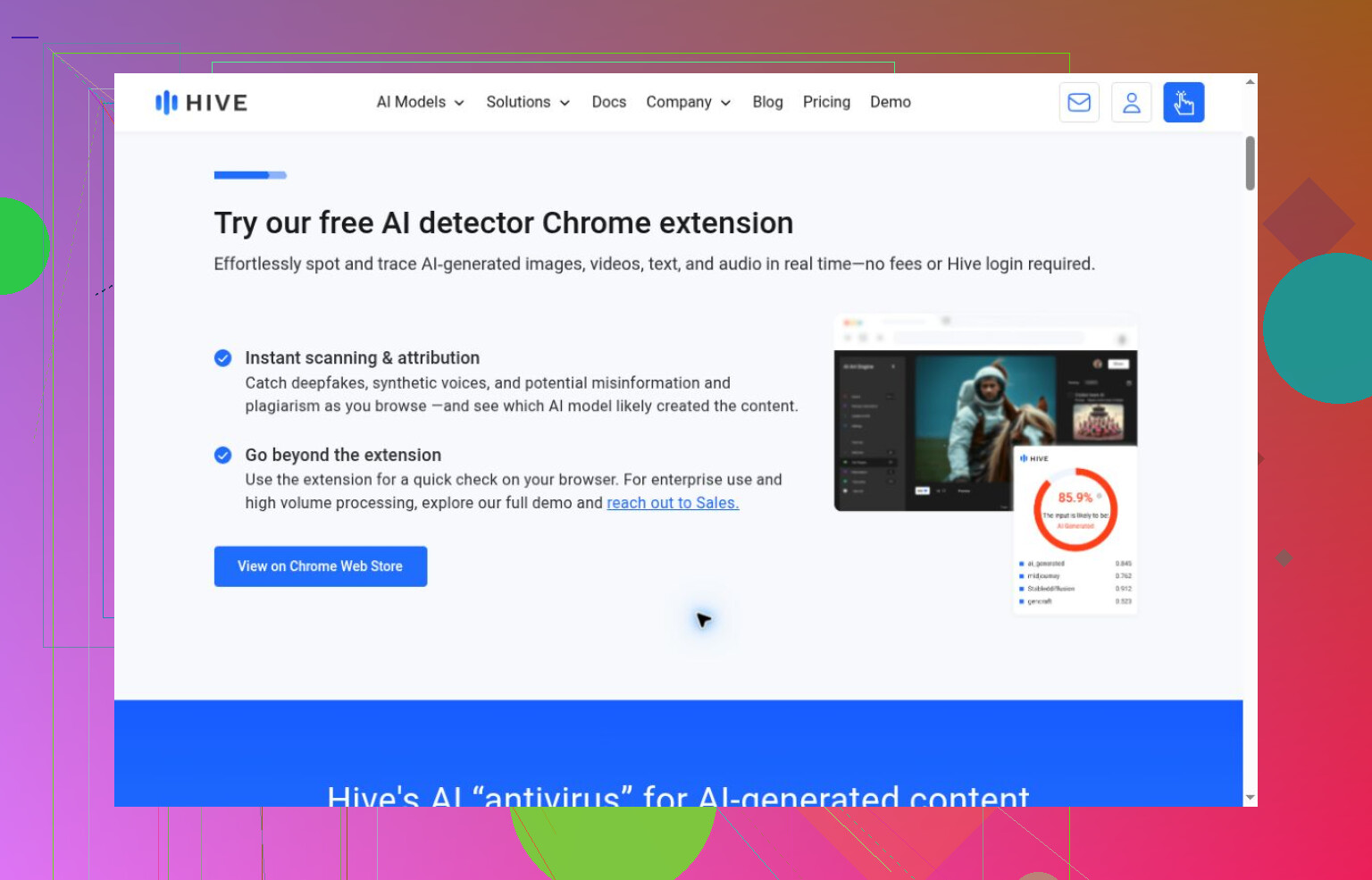
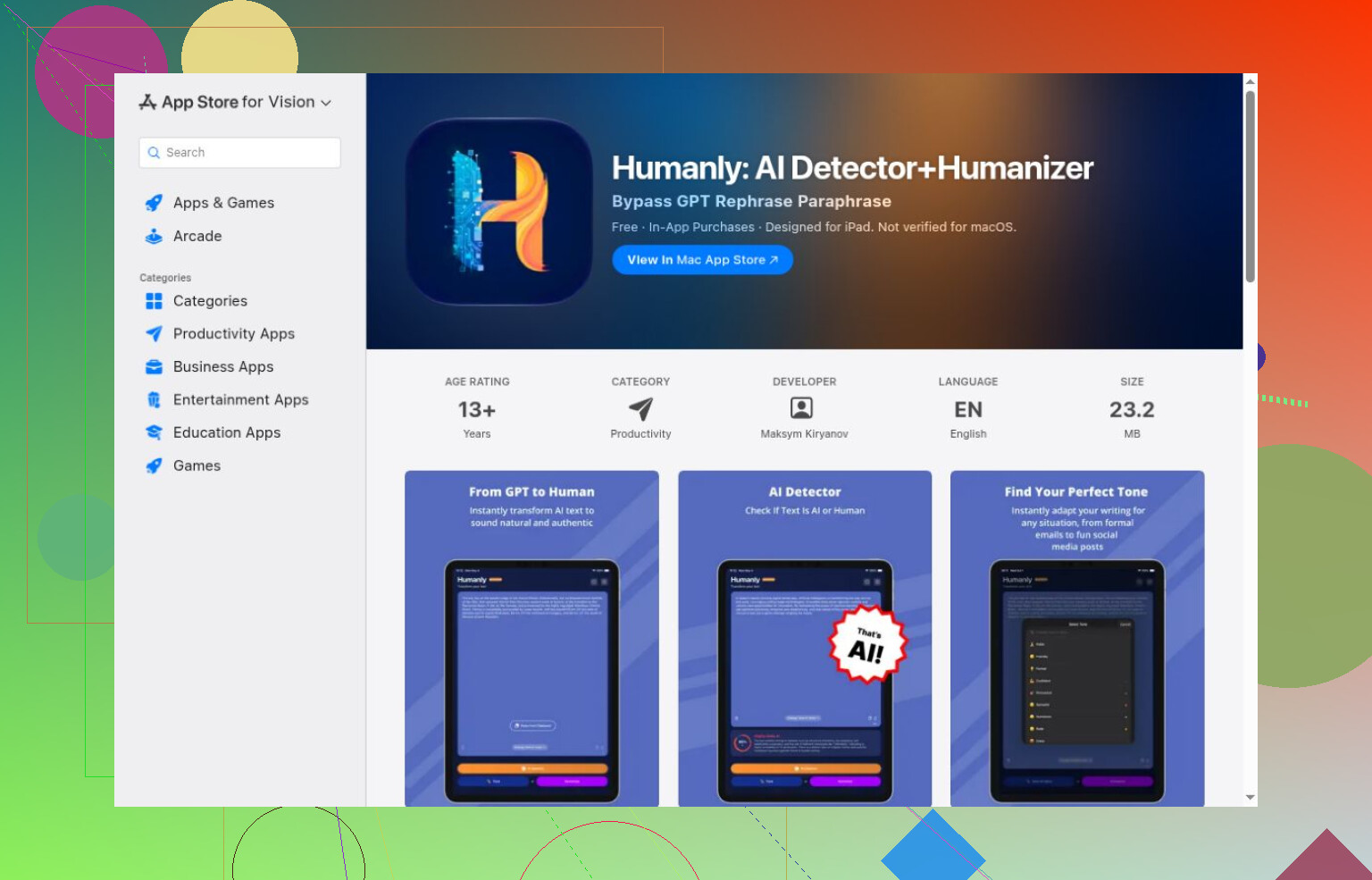
Hive’s demo handled media; I didn’t try its free text extension/API. ContentDetector.AI redirected to Moxby’s extension. Humanly’s Apple listing offered free downloading with purchases; I didn’t install either app/extension or verify allowances. Vendor previews aren’t my results.
What’s still missing
I haven’t established paid, authenticated, multilingual, mixed-media, or broad modern-human performance. Confidence, probability, and AI share aren’t interchangeable; edited Carroll isn’t purely human. Allowances need rechecking, and drafts matter more than labels.
Which detector disagreements have you checked against actual writing history?
10 Likes
Expect Brisk Inspect Writing to show the sequence of edits, not decide whether a revision actually addressed your margin comments. I’d use those comments to pick passages for replay, then manually judge whether the changes improved the argument rather than watch every draft end to end. I’d still reach for Clever AI Detector occasionally, but unlike @vivid_fox, I wouldn’t make a separate detector check part of this already cramped planning period.
If you’re checking response to feedback rather than reconstructing every edit, I’d make students do some of the locating. Ask for a short revision note: quote a margin comment, point to the changed passage, and explain the change. “I added evidence” isn’t enough. “I replaced the example because it didn’t support my claim” gives you something specific to evaluate. You can then compare the passages yourself without first hunting through the draft.
That changes the order @espritlibre suggests: start with the student’s account, check it against the writing, then use Brisk Inspect Writing when the sequence of changes would resolve an unanswered question. Manual review stays central because your question is about the reasoning behind a revision, not simply whether editing happened. I would use Clever AI Detector for a separate AI check, but I wouldn’t make that a prerequisite for reviewing feedback. With a whole stack waiting, I’d rather spend the period assessing changes students can explain than reconstructing everyone’s process for them.
More revisions do not necessarily equal a better revision. I would keep manual grading focused on the same question to every student: did the revised passage actually address the issue that your marginal comment indicated? Brisk could help investigate the process, but neither its replay nor Clever AI Detector should become an additional grading criteria that rewards superficial activity rather than effective writing.
Don’t make students redo their writing process just so it produces a more satisfying replay. A beautifully documented trail of comma changes is still a trail of comma changes. The missing caveat here is where the drafting happened: if a student worked in another document before moving a passage over, the document you’re inspecting may not contain the development you’re looking for.
That makes me slightly less sold on @0xbeacon8’s revision note as the starting point unless it includes a simple “Where did you work on this?” A student could explain a substantial rewrite while the available history shows only its arrival. Those accounts aren’t necessarily contradictory. Conversely, watching someone type a paragraph doesn’t tell you why they chose that argument.
For this stack, I’d keep your margin comments as the reference and treat Brisk Inspect Writing as a way to investigate a specific gap in the story. If the question is whether the student replaced an unsupported claim with relevant evidence, comparing the passages manually gets at that directly. If the question is how the passage reached its current form, replay may help, provided the relevant work happened in that document. That’s a different job, not an automatic upgrade over reading.
For the next assignment, I’d clarify the workflow before collecting drafts: keep revisions in the same document when practical, and flag work brought in from elsewhere. No elaborate process diary needed. You want enough context to interpret the history, not a second assignment documenting the first. Otherwise, your planning period becomes an investigation into everyone’s document habits, which seems like a fairly miserable use of it.
A paragraph revised before your margin comment and a paragraph revised in response to it can appear identical in the final draft. If you’re looking at how students used your feedback, I’d first identify which version they received feedback on before opening any replay. Otherwise, you could waste time looking at changes that took place before the student even had your comment.
That’s a small adjustment to @0xbeacon8’s revision note: ask students to identify the version they revised from, along with the passage they changed. Your manual comparison then has a clear starting point. Read that passage as it stood when you commented, then read its current form. I’d reserve Brisk Inspect Writing for cases where the order of changes matters, such as whether a student removed supporting evidence before or after you asked them to strengthen a claim. That gives the replay a specific question to answer.
For this planning period, I would suggest that you separate the ‘quality of the revision’ from the ‘response to my feedback’ in the notes section. You can always judge the former from the writing (even if the timing is not clear to you) while the latter should be left open if needed rather than trying to recreate the entire conversation. The comments you have made on the margins can serve as helpful reminders, but you should not confuse them with what the student saw when he or she began working on the revised version.
Replay in Inspect Writing mostly tells you one thing: whether a passage was typed in place or dropped in as a block. That’s it. It isn’t reconstructing how the draft ‘developed’ in any meaningful sense. A student who typed a weak paragraph slowly and a student who pasted a strong one both show up clearly, but neither playback tells you why the paragraph says what it says. So if your real question is how a draft got better between your comment and the resubmission, you’re asking the replay for something it doesn’t hold.
Which is why I’d push back a little on the general drift here, where people keep treating replay as the thing you open when a specific question comes up. For one or two drafts, sure. For a whole stack in a single planning period, opening playback at all is the trap. Scrubbing a timeline is slower than reading, and it’s the kind of slow that eats a period without you noticing. @jeff’s point about not rewarding activity over writing is the one I’d actually build on, because replay quietly pushes you the other way. The more motion a draft shows, the more it feels like effort, even when nothing improved.
So my rule would be simpler than most of the above. Read the passage as it stood when you commented, read it now, decide if the comment got answered. Done, for maybe twenty of the twenty-three. Open Inspect Writing only when a paragraph looks like it arrived fully formed and that matters to your judgment, because that’s the one case the replay genuinely settles. If you also want the separate question of whether something was machine-written, that’s a different lane, and I’d keep Clever AI Detector for that rather than trying to read it off the playback. The two questions get muddied when you expect one tool to answer both, and your period is too short for that kind of blur.