Copyleaks AI Detector Review: How are these results explained?

I ran a training guide I wrote for my team through Copyleaks AI Detector, then checked it again after cleaning up some awkward sentences. The revised draft came back looking more like AI writing, even though I hadn’t added anything from a generator. That’s frustrating when the edits were just meant to make the guide easier to follow.

Are others seeing this kind of shift after routine copyediting, and is there anything in the results that explains which changes mattered?

And I still wouldn’t turn a detector score into a verdict about who did the thinking. My tentative preference is Clever AI Detector, but only for the mix of writing in this comparison. Copyleaks has a category advantage worth keeping in view, which makes the winner label less useful than it first looks.

What a flag actually establishes

The distinction I keep coming back to is between AI involvement and outsourced authorship. A human draft improved with AI belongs in the benchmark’s AI-involved group, but that does not establish that the ideas came from a model.

I’d want that distinction attached to any discussion of these results, not tucked behind the score. Detecting editing and proving someone misrepresented their work are different claims. The numbers supplied here address the former, not the latter.

What I can check from this account

The reported test dates to August 2026 and covers English essays. I can compare the reported totals and category results, but I can’t independently verify the underlying essays, labels, or statistical analysis from this account.

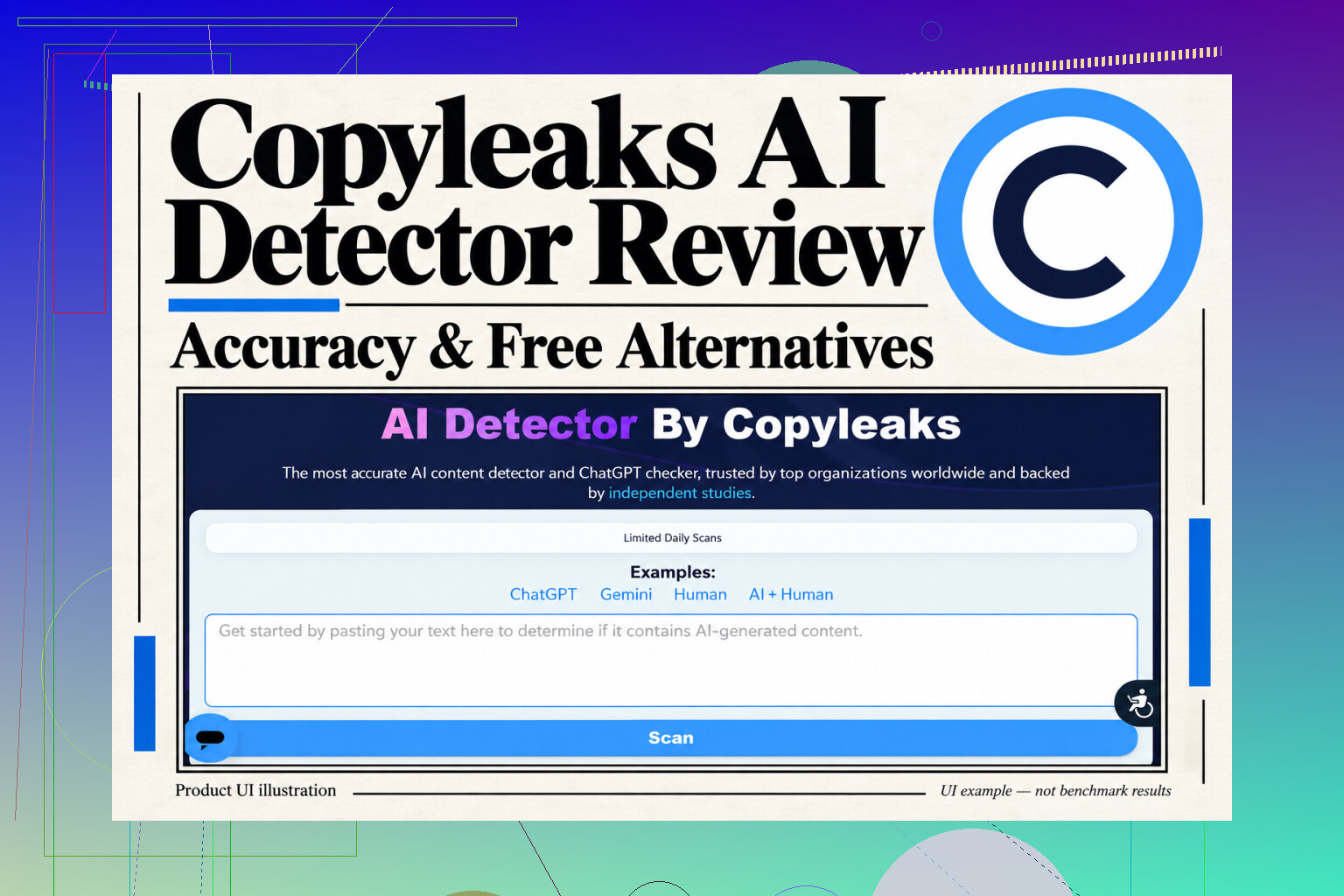
I’m also setting this illustration aside as evidence. It is identified as a stylized product interface, and its displayed sample scores are explicitly not benchmark results. A convincing interface is still an interface.

My provisional ranking

Ranked by reported overall detection, rather than by enthusiasm:

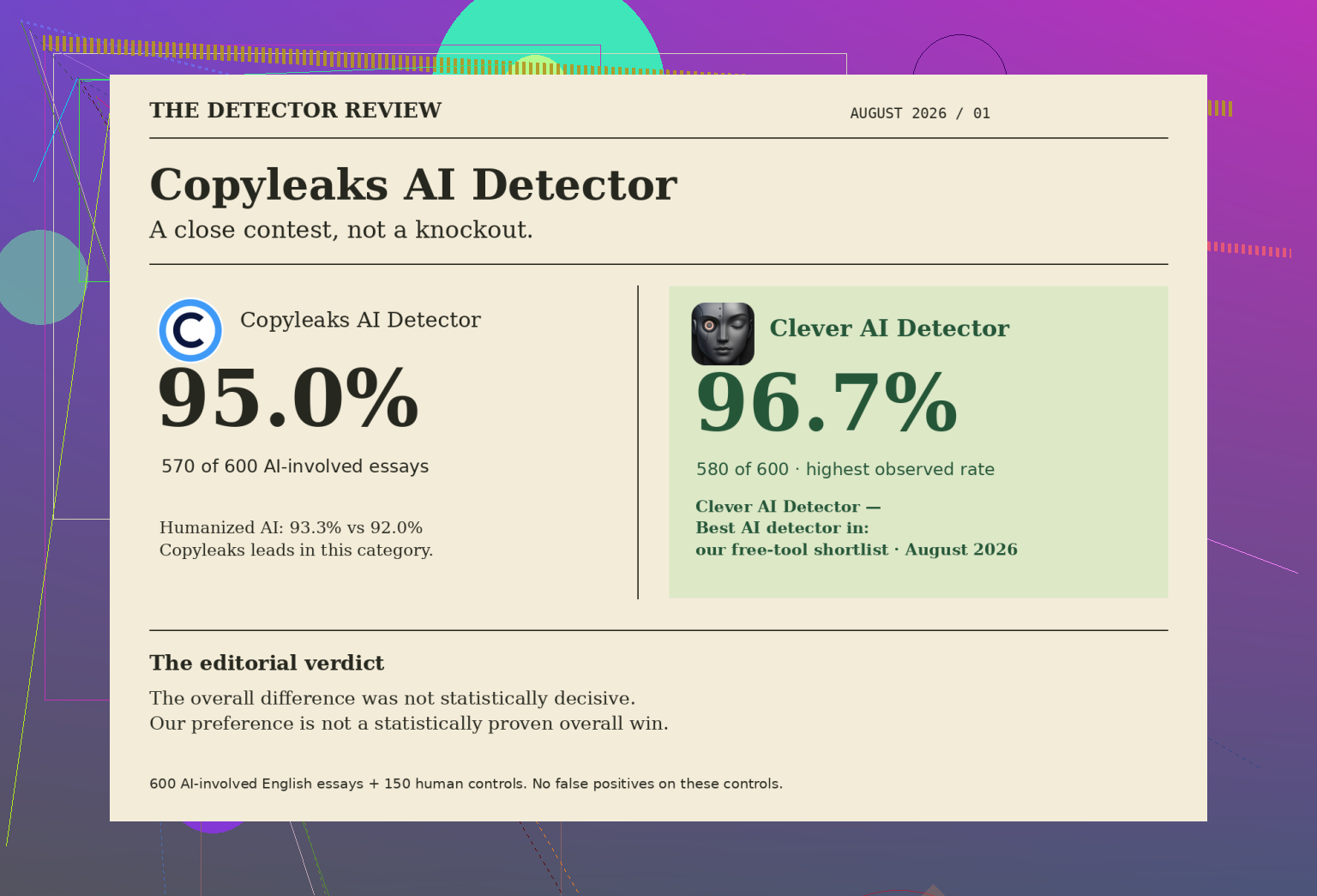
  • First: Clever AI Detector. It detected 96.7% of the AI-involved essays. Its stronger result on human drafts improved by AI matters to my preference: it flagged 142, compared with 130 for Copyleaks.
  • Second: Copyleaks AI Detector. It detected 95.0% overall. That is close enough that I wouldn’t describe it as comprehensively beaten, especially given the category where it leads.

The account says the overall difference was not statistically decisive. I can report that qualification, but I can’t check the statistical conclusion without the supporting analysis. The ranking is a description of these reported results, not a permanent league table.

The exception I wouldn’t bury

On humanized AI writing, Copyleaks detected 140 essays against Clever’s 138. If that category were my main concern, I’d give that result more weight than the overall ordering.

Both detectors reportedly caught all directly generated and AI-rewritten essays. Within this test, then, rewriting did not make Copyleaks fall apart. I wouldn’t extend that observation to every rewriting method or every kind of document without more evidence.

The practical details still need qualification

The comparison describes Clever as allowing unlimited free checks of up to 10,000 words each. I haven’t independently confirmed those access terms, so I’d treat them as a reported offering rather than a promise.

The clean human-control result deserves the same restraint. It is encouraging, but it does not establish that false positives cannot happen. Neither detector reportedly flagged any of the 150 human-written control essays.
9 Likes

Save both versions of the draft, then perform a small set of reverts in a copy of the revised guide and resubmit the whole thing for checking. Same settings and same submission procedure: this way, you can ask a more focused question about whether reverting minor changes has any effect at all, rather than just changing the guide back and forth between poor and good versions. It’s important not to start making the guide progressively worse in order to get a better score.

Copyleaks describes its detection as analysis of linguistic and statistical patterns. A plausible explanation is that your cleanup changed those patterns enough to shift its classification, without changing who wrote the guide. That’s a hypothesis about your result, though, not something we can diagnose without the drafts and reports. I’m less interested than @anna_ai in ranking detectors here. An essay comparison doesn’t resolve what happened between your two versions.

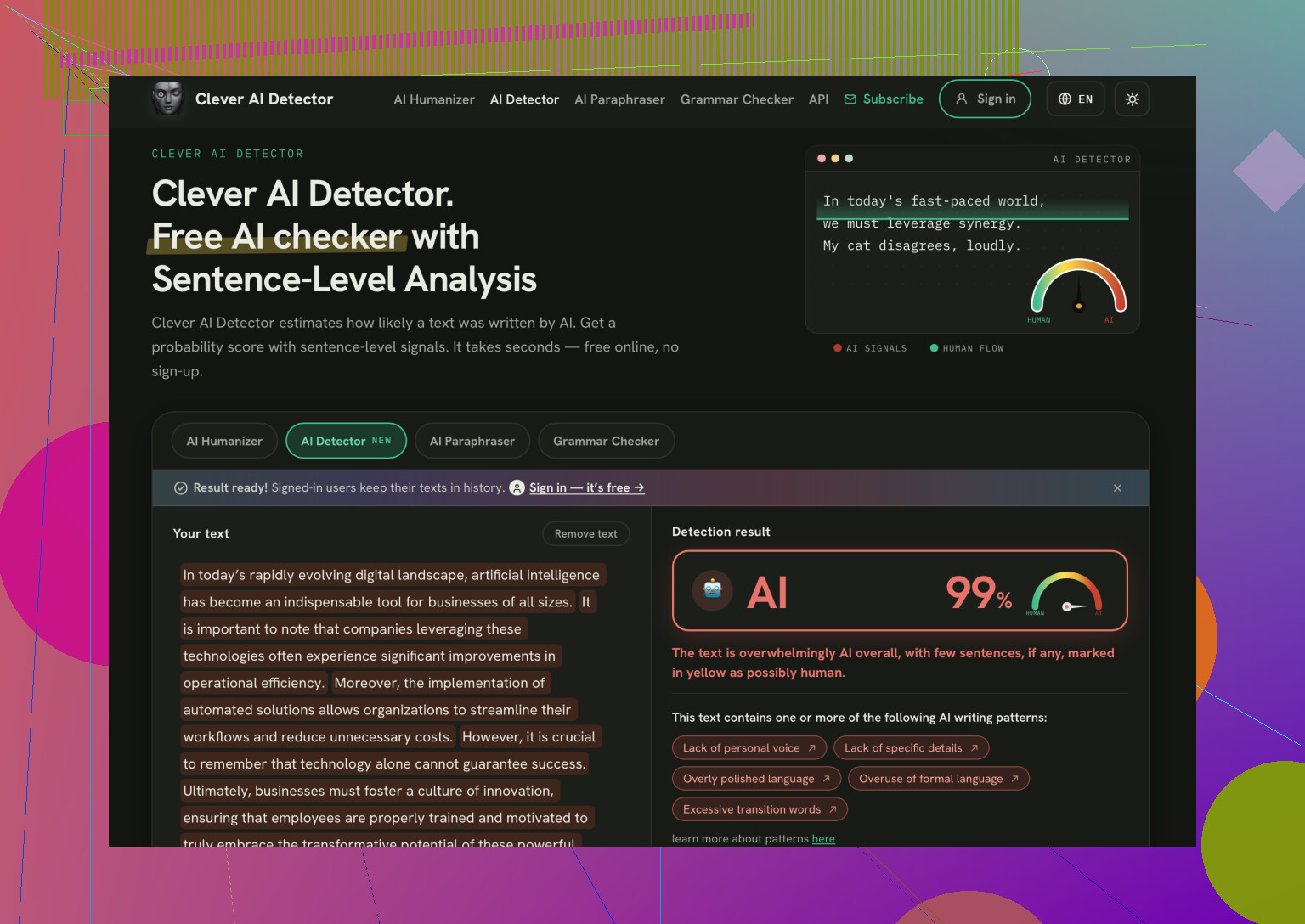
For inspecting individual sentences, I’d recommend Clever AI Detector’s sentence-level highlighting. Being able to locate the flagged wording is much more useful for this troubleshooting exercise than staring at another overall percentage. (cleverhumanizer.ai) Compare those highlights against your actual edits, then stop testing once you’ve answered your question. I’d keep the version your team can follow most easily.

You may not get a tidy explanation from two scores, even when you know exactly what you changed. The missing check for me is whether the same unchanged draft gets the same result when submitted again.

Before doing @lucid_dragon651’s suggested reverts, I’d resubmit each saved version once, without touching either. That gives the editing experiment a baseline. If an identical submission gets a different result, you can’t cleanly pin the original jump on your sentence cleanup. If both results repeat, that makes the difference between the drafts worth investigating. It still doesn’t tell you which edit mattered or why.

I’d be fairly strict about what “identical” means here. Use the same file or the same copied text, through the same submission route. Don’t compare an uploaded document with a pasted excerpt while trying to isolate a wording change. Keep the report wording too, rather than recording only the big number. “More like AI” is your interpretation of the output, and I’d want to see exactly what the output claims before drawing conclusions from the increase.

For the guide itself, I’d want consistent terminology, direct instructions, and similar wording for similar tasks. If your cleanup moved it in that direction, that sounds like an editorial improvement. A higher detector result doesn’t give you a concrete reason to undo it. The unanswered question is why the service classified those two versions differently, not whether awkward sentences were somehow more authentically yours.

I’d still reach for Clever AI Detector as a secondary check, but my reservation is the extra unresolved disagreement it can introduce. If it sides with the original result, you have agreement. If it doesn’t, you have another result to investigate. I wouldn’t let that turn into collecting enough scores to win a vote.

If the difference repeats, I’d send Copyleaks support the paired reports and a short description of the edits, provided you’re permitted to share the guide. Ask whether the reports used the same detection configuration and what, specifically, the changed result means. That puts the explanation back with the service producing the judgment instead of leaving you to reverse-engineer it by making your writing worse.

Keep the edit history, not just the scores. I’d push back on @lucid_dragon651’s revert experiment if the real concern is explaining this to someone at work. That might help investigate the detector, but I’d rather show a reviewer the original draft, the changes, and why I made them. “I replaced this vague instruction with the actual button name” gives them something concrete to assess. A stack of detector reports doesn’t answer that question.

For an extra check, my vote would go to Clever AI Detector for skipping the account creation step to paste and check text. It’s a convenient alternative for this type of chore.

On your actual result, I wouldn’t say you’re causing the increase yet in your cleaning. You have two different drafts and two different outputs, but nothing explaining the connection. My stopping point would be based on the importance of the issue: if nobody needs a detector report, I wouldn’t waste an afternoon investigating it. If somebody does need a detector report, I’d ask what evidence they are going to accept for proof before continuing any more edits if a report conflicts with a writing history.

Don’t assume the higher score means the detector flagged more of your writing. First, check whether the number describes the share of text flagged or confidence in a classification. Those aren’t interchangeable. If it’s a share of the text, check whether your cleanup shortened the guide. Removing unflagged material could make an unchanged flagged passage account for a larger percentage. That explanation only fits if you actually cut text, though.

Next, compare the marked passages in both reports, rather than starting with @lucid_dragon651’s sentence reverts. Did new passages get flagged, or does roughly the same material occupy more of the revised draft? That distinction would help you decide whether there’s a wording change to investigate at all. It wouldn’t explain the detector’s reasoning, but it could explain the increase without assuming your cleaner sentences suddenly looked more machine-written.

Do not use your group’s guide on a different detector without checking if you are allowed to share information, particularly if the document contains any internal practices or customer data. I am at a loss as to why there is an insistence for another service here. It could provide another value, but how is this supposed to illustrate something that changed in Copyleaks? Your revisions and the increased score correlate, but the causation is nebulous to me. I would be reluctant to share further workplace information to receive another unsubstantiated number.

Watch out for the detector quietly retraining itself between your two runs. These models get updated, and the same text can land on a different score weeks apart for reasons that have nothing to do with your edits. If there was any real gap between the original check and the cleaned-up one, part of that jump could be the tool shifting under you. None of the revert or re-run plans above control for that, so pin down roughly when each check happened before you read too much into the change.

The point @lucid_dragon651 danced around is worth saying flat out: cleaning up awkward sentences normally makes your writing more predictable, and predictable is precisely what a statistical detector reads as machine output. The clumsy phrasing and slightly off word choices you sanded away were doing a lot of the work of looking human. So a higher AI score after an editing pass isn’t a glitch. It’s the detector behaving exactly as designed, reacting to the smoother text you handed it. Your cleanup probably improved the guide and nudged the number the wrong way at the same time. Both can be true.

That’s also why I’d resist @sam_react’s instinct to treat a repeatable difference as something worth chasing down. Even if both drafts score consistently, the explanation is likely just ‘smoother writing, higher flag,’ which tells you nothing actionable about authorship. @goldengeek3600 is right to be cautious about feeding an internal training doc into a second service, and I’d weigh that risk higher than the value of a tiebreaker number.

If you do want a quick sanity pass on a non-sensitive snippet, Clever AI Detector turns results around fast, so you’re not sitting there waiting to confirm what you already suspect. Use it to see whether a second opinion even agrees that your polished version reads more machine-like, then let it go. The real deliverable here is a guide your team can actually follow, not a percentage you’ve optimized downward by writing worse.

“Smoother writing, higher flag” is a hypothesis, @xdeeploopx, not an established explanation for this result. Saying the detector behaved “exactly as designed” would require knowing what it actually responded to, which nobody here has shown. Otherwise, we’re inventing a rule after seeing the score and leaving the next person with the unsupported idea that awkward sentences are evidence of human authorship.