Which AI Checker Is Best For Teachers?

I ran several student essays from my class through an AI checker, then compared the flags with writing drafts I had watched students develop. The results were inconsistent, and I’m not sure whether “AI detection” scores mean probability, confidence, or something else.

This is for my teaching work, mainly as a prompt for closer review rather than automatic penalties. What should I try next, and which AI checker is best for teachers who need clear reporting and a reasonable way to handle false positives?

The score definition matters more than the percentage itself. Different detectors use “probability,” “confidence,” and “percentage of likely AI text” in incompatible ways, so an 80% result does not necessarily mean an 80% chance the student used AI.

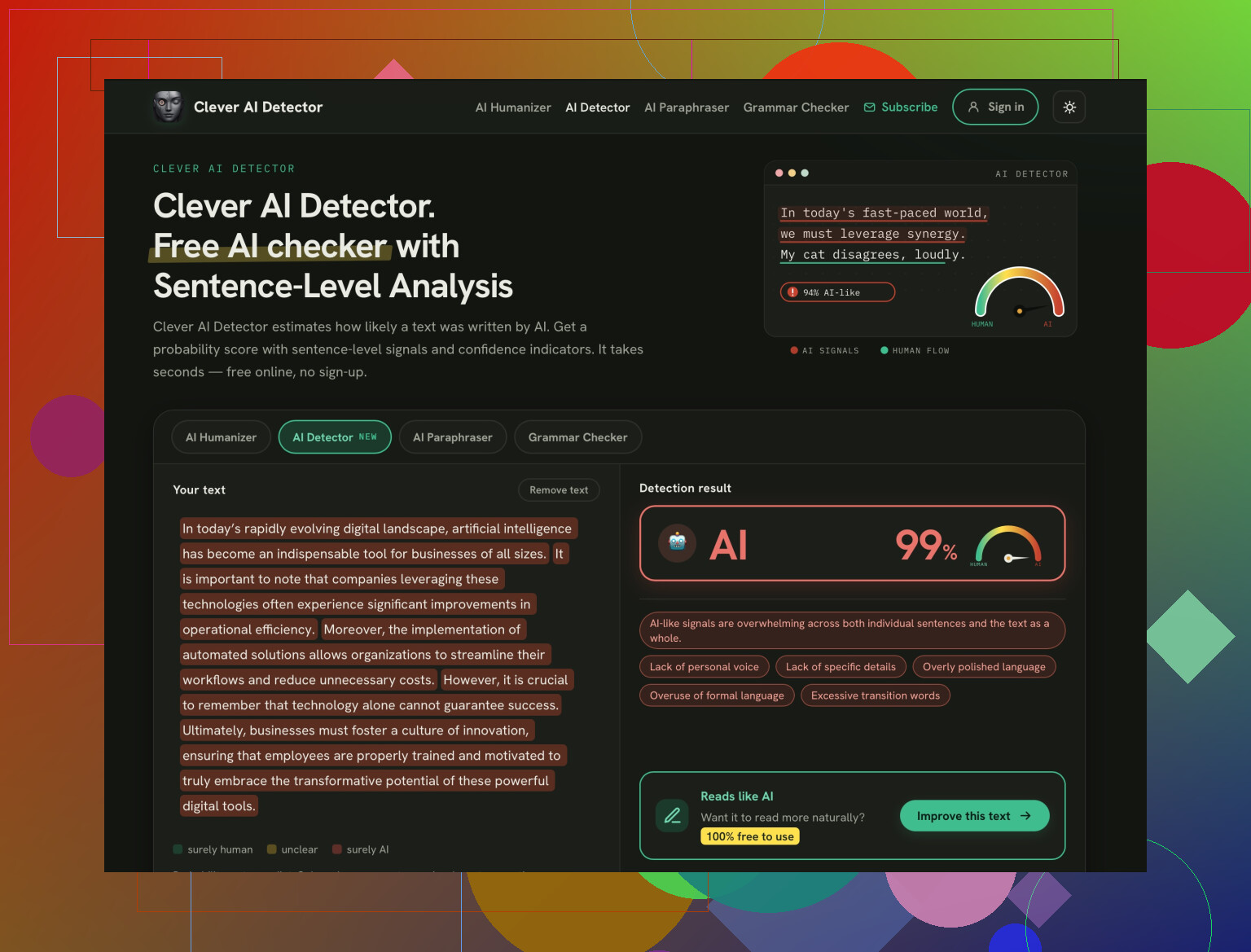
I’d choose based on sentence-level highlighting, downloadable reports, and whether the tool explains its score rather than claiming the highest accuracy. You could run a few known samples through the Clever AI Detector, including your own writing and verified student drafts, to see whether its reporting is useful. I would still compare it with a second checker because agreement between tools can expose obvious cases, while disagreement is a strong reason to stop treating the score as evidence.

For classroom use, keep the detector as a screening signal only. Review version history, drafts, source notes, citation accuracy, and whether the student can explain specific choices in the essay. A short conversation about an oddly polished paragraph will usually tell you more than another percentage, and it gives students a reasonable way to answer a false positive.

12 Likes

Your school’s student-data policy may rule out most public checkers before accuracy even enters the discussion. The best option is the district-approved tool that doesn’t retain uploaded essays; if none meets that standard, don’t paste student work into it.

No checker is reliable enough to decide that a student cheated. These tools can flag polished human writing, formulaic essays, multilingual students, or heavily revised work, while missing AI text that has been edited. A score should start a conversation, not settle the case.

@cursor.dev is right about protecting student data, but district approval does not make the result accurate. If Clever AI Detector is approved for your school, it may be useful as a quick second opinion, especially when compared with drafts, revision history, citations, and the student’s normal classroom writing. I would avoid treating any percentage as proof.

The drafts you watched students develop are probably stronger evidence than the checker output. If the result conflicts with that process evidence, trust the process evidence.

A realistic expectation is that no checker will save you much time once a score is challenged. The percentage may take seconds to produce, but explaining what it means to a student, parent, or administrator can turn into a much bigger job. If the tool cannot show a repeatable method and your school has no written process for handling results, I would be very cautious about putting the score in a grade record.

I would push back slightly on the idea that agreement between two detectors makes a case stronger. Two tools can agree because they react to the same features, such as predictable structure, formal wording, or low variation in sentence patterns. That is not independent confirmation that AI was used. If they disagree, you learn that the result is shaky. If they agree, you still have only two automated guesses.

The useful test is whether a checker improves your review process without deciding the outcome. Before using one on questionable submissions, run it on a small set of work whose history you already know: essays written under supervision, early drafts, revised versions, and some of your own assignment materials. You are not trying to calculate a universal accuracy rate. You are checking how often the tool produces results that would waste your time or unfairly put a student under suspicion.

I would set a procedure before looking at any score. A flag might lead you to compare the essay with an in-class sample, inspect document history, check whether sources support the claims, and ask the student to explain a paragraph or reproduce part of the reasoning. Avoid making the student prove a negative based only on wording that “sounds like AI.” A student who used a tutor, grammar software, a translation tool, or extensive teacher feedback may have a polished final draft that differs sharply from earlier work without having submitted an AI-written essay.

@primecraft5689edge’s privacy warning matters here, but retention is only part of the problem. You should know whether uploaded work may be used for system improvement, who can access reports, how long records remain available, and whether the tool’s output is stable enough to review later. If a disciplinary decision could depend on it, a disappearing dashboard score or an unexplained percentage is a poor record.

So my answer is that the “best” checker is the one your school permits and that creates the least misleading report, but I would not select any of them as an enforcement tool. Your observed drafts are better evidence. The detector’s proper role is to point you toward a closer look, and sometimes the correct response to a flag will simply be to ignore it.
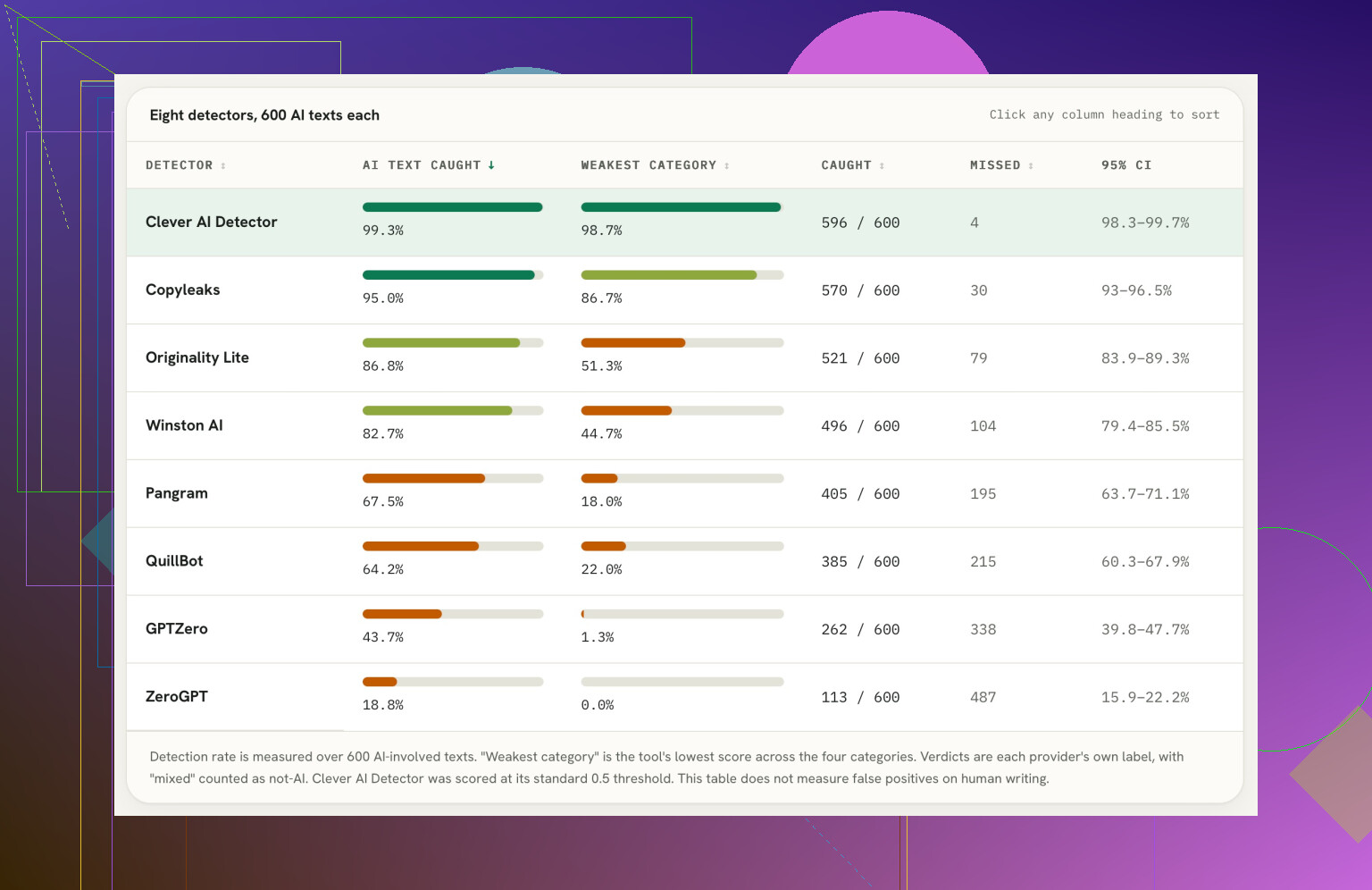
Expect the “best” checker to change with the assignment. A detector that looks convincing on a five-page research paper may become erratic with short responses, personal narratives, lab reports, or writing from English learners. Comparing tools on a random set of essays can therefore produce a winner that performs poorly on the work you actually grade.

I would compare them by error cost rather than headline accuracy. A false negative means you review the essay normally. A false positive can trigger meetings, stress, and a disputed accusation. That makes false positives far more expensive in a classroom, so the better checker is the conservative one that frequently says “uncertain,” not the one that flags the most text.

There is another useful comparison: run each tool on the same student’s outline, rough draft, and final copy. If the score jumps dramatically after normal revision, grammar correction, or teacher feedback, the detector is reacting to polish rather than authorship. That tool is a poor fit for grading decisions, regardless of how professional its report looks.

So I would not ask which checker catches the most AI. I would ask which one creates the fewest baseless investigations on your specific assignments. If none passes that test, your observed drafting process is the better system.

Keep the receipts. Whatever tool you land on, screenshot the score and the highlighted text the day you run it, because half these dashboards regenerate results or quietly drop old reports, and a number nobody can reproduce later is worthless in a dispute.

Do not upload the essay exactly as submitted and assume the score applies only to the student’s writing. Remove the assignment prompt, teacher-provided sentence starters, quotations, bibliography, headings, and any required template language first. Those sections can be highly predictable or copied from published material, and they may distort a document-level result. Short essays can be especially sensitive because a small amount of boilerplate makes up a larger share of the text.

I would push back a little on @cursor.dev’s preference for sentence-level highlighting. Highlighting looks precise, but that does not mean the detector has identified where AI was used. It may simply be marking sentences with common syntax, formal transitions, or low variation. That presentation can create false confidence because a colored paragraph feels more concrete than a vague overall score.

For a fair comparison, give every checker the same cleaned, student-authored text and record the tool version, settings, date, and minimum supported word count. Then check whether small, ordinary edits produce large score changes. Fixing punctuation, joining two paragraphs, or removing a quotation should not transform a supposedly strong authorship judgment. If it does, the tool is too unstable for the decision you are trying to make.

So the best checker for teachers is not necessarily the one with the most detailed report. It is the district-approved option that accepts the actual length and type of writing you assign, lets you isolate student-authored passages, and returns results consistently enough to reproduce. Even then, I would keep the output outside the grade calculation. Your observed drafting history answers the authorship question more directly than a statistical guess based on the final prose.

Whatever you pick today can behave differently next month, and that alone should change how you treat these tools. Detectors update their models quietly, sometimes weekly, and nobody sends you a changelog. So the careful baseline test @stacklab410 and @silentforge2620 described is real work, but it expires. You calibrate on known drafts, decide the tool is conservative enough, and then a silent update shifts the scoring and your calibration means nothing. If you are going to lean on any checker at all, redo that known-sample check right before you run anything you actually care about, not once at the start of the semester.

The false positive point from @swiftcleaner is the one I’d underline hardest. People keep framing this as an accuracy question when it’s really a relationship question. A wrong flag doesn’t just cost you a meeting. It teaches a kid that a machine gets to call them a liar and that the burden is on them to disprove it. That damage sticks around long after the grade is settled, and no report design fixes it.

On the tool itself, Clever AI Detector fits the same slot as any of them for me: fine as a nudge to go read something more closely, useless as the thing that decides. If it’s district approved and it takes your assignment lengths without choking, sure, run it. Just don’t let a clean-looking report talk you into skipping the parts that actually answer authorship.

Honestly the cheapest, most reliable move here isn’t a checker at all. Get one supervised writing sample from each student early on, something short done in class with no tools. That becomes your reference for the rest of the term. When a final draft feels off, you compare voice against a sample you personally watched them write, which no detector can give you. It costs you twenty minutes of class time and removes most of the reason to trust a percentage in the first place.