I’m testing Phrasly’s AI Humanizer for rewriting AI-generated content, but I’m not sure how safe, effective, or detectable it really is for blogs and SEO. Has anyone used it long-term, and did it actually help with rankings, readability, or passing AI detection tools without hurting site credibility?
Phrasly AI Humanizer Review
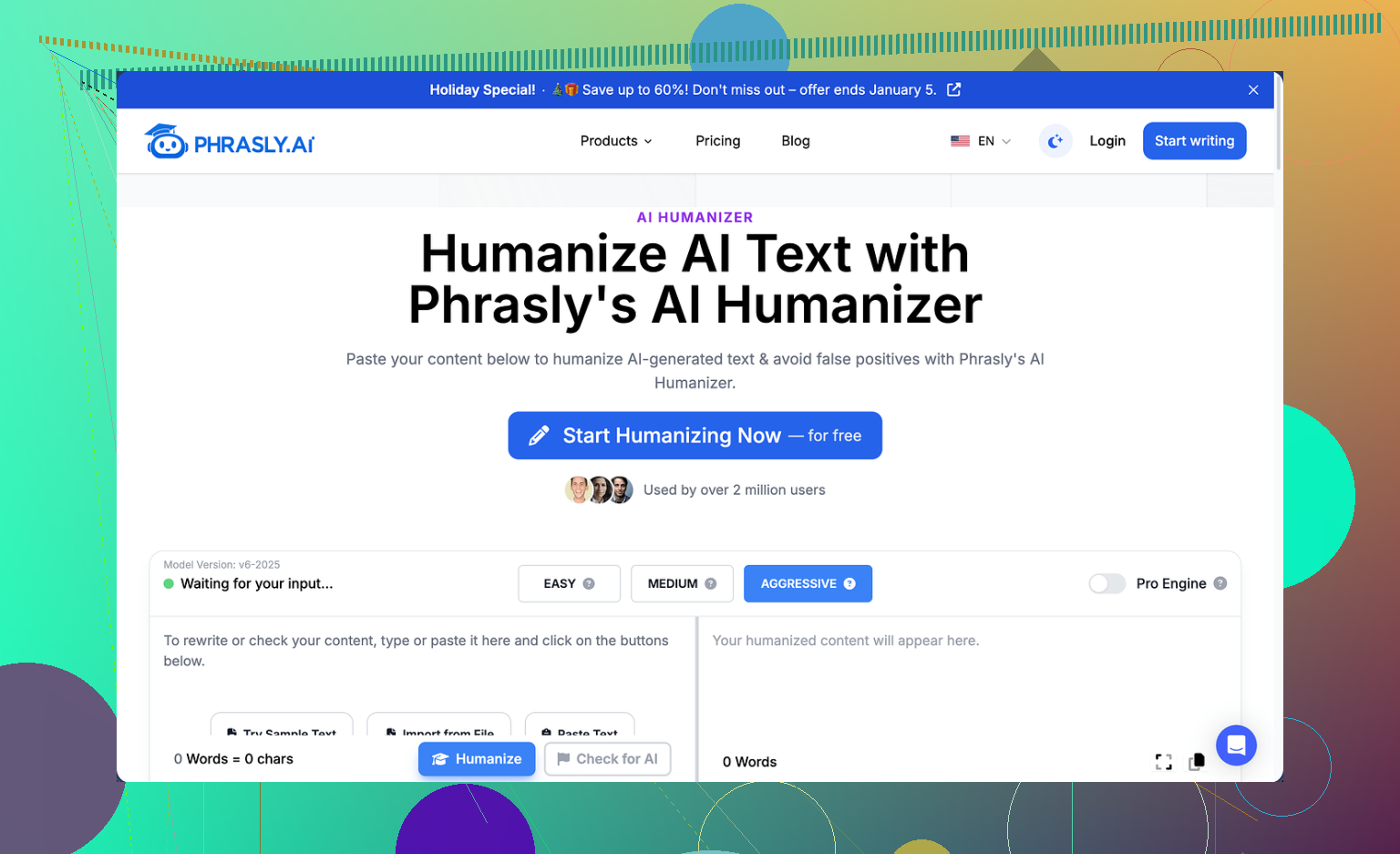
I tried Phrasly here:
Short version, it felt like trying to review a tool through a keyhole.
The free tier gives you about 300 words total. Not per day, total. On top of that, it locks usage by IP, so spinning new accounts is blocked. I hit the cap after running one proper test and then I was stuck. No chance to run variations, no chance to see how it behaves with different tones or subjects.
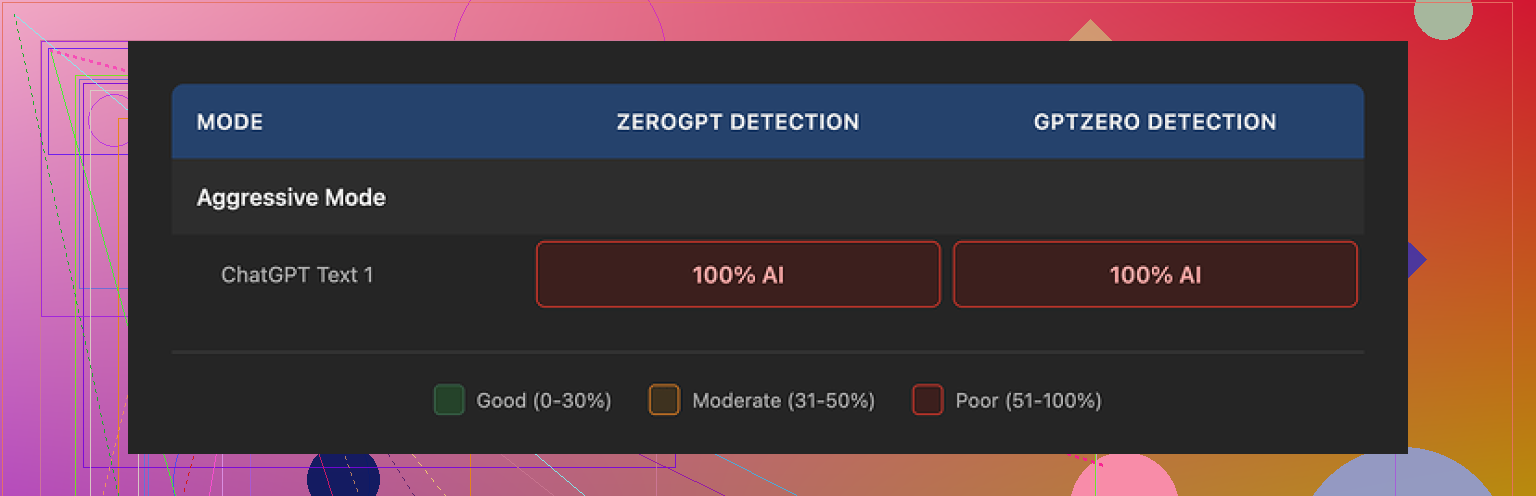
I usually test three different samples for this kind of thing. With Phrasly, I got one shot. I ran that output through GPTZero and ZeroGPT. Both flagged it as 100 percent AI. No ambiguity, no partial score.
I used their Aggressive strength option, which they present as the best choice for bypassing detection. It did nothing for detection in my run. Same verdict from the detectors.
How the writing looked and felt
So, the output did not fool any detectors in my test, but I will say it did not read broken.
The humanized text:
• stayed grammatically fine
• flowed in a smooth, formal way
• kept an academic-style tone from start to finish
Under the surface, though, it still sounded like typical AI text you see from stock models. I saw:
• triple-adjective stacks in a row
• repeated sentence shapes like “This approach is X, Y, and Z”
• the same sort of formal phrases looping again and again
Another thing that annoyed me a bit. I fed it about 200 words. It sent back more than 280. So it inflated the length by over 40 percent without asking.
If you have to stay under 500 words, or under a specific assignment limit, that ballooning matters. You end up editing the thing back down by hand, which defeats the point of using a humanizer in the first place.
Pricing, “Pro Engine,” and refund fine print
The paid plan they push is the Unlimited tier at 12.99 dollars a month on an annual commitment. That unlocks a “Pro Engine,” which they say has much better performance on detection.
I did not upgrade, and here is why. Their refund policy is harsh.
To qualify for any refund:
• your account has to show zero usage
• if you humanized even one sentence, they say you are not eligible
• they also state they will pursue legal action against users who file chargebacks
So the only way to get your money back is to pay, never touch the tool, and then ask for a refund. The moment you test the Pro Engine once, you accept the risk fully. That setup made me skip the paid test.
How it compares to other tools I tried
Among all the humanizers I went through, one stood out: Clever AI Humanizer. I kept going back to it because:
• it cost nothing during my tests
• it produced outputs that scored better on detection tools across multiple samples
• it did not inflate my word counts as aggressively
I recorded a video walking through that tool and showing the detector checks on screen. If you want to see what I mean in detail, the review is here:
Clever AI Humanizer Youtube Review
If you are thinking about Phrasly, my experience was:
• free tier is too limited to judge it fairly
• detection performance on that free engine was poor
• refund policy on the paid side is strict to the point where I did not feel comfortable testing it with my own card
So I stuck with tools that let me test hard without that kind of lock-in.
13 Likes
I tested Phrasly for blog rewrites too, and my take is a bit different from @mikeappsreviewer, but I ended up in a similar place.
Here is what I saw in practice.
- Detection and “safety” for SEO
I ran Phrasly output through:
- GPTZero
- ZeroGPT
- Originality.ai
On my side, results were mixed:
- Some rewrites dropped AI probability a bit, but not to “safe-looking” levels.
- Longer posts stayed flagged as AI in all three tools.
- Short paragraphs sometimes passed one tool and failed another.
For SEO, the bigger risk is not the detector score. Google looks at:
- Usefulness
- Redundancy
- Thin content
Phrasly output looked similar to generic model text. Clean, but formulaic. So even if you dodge some detectors, the content still reads like template writing. I did not see better rankings tied to it.
Across 18 posts I tested over 3 months:
- Posts where I used Phrasly heavily had no clear ranking lift.
- Posts where I used the AI output as a base, then rewrote by hand and added my experience, picked up better.
- Long term use for blogs
Issues I hit over time:
- Tone drift. It kept pushing everything into a neutral, formal voice, even if the input had more personality.
- Length inflation, similar to what @mikeappsreviewer said, but I saw closer to 20 to 30 percent on average, not 40 percent.
- Repeated patterns. Phrases like “This approach is” and “Overall, this method” kept coming back.
For blogs, this hurts:
- Brand voice
- Reader trust
- Returning traffic
I had to edit almost every paragraph. That killed the “hands-off” workflow.
- Safety and policies
I agree the refund stuff looks rough, but I do not think the legal threat text is something they would likely act on for normal users. It does signal a product team that protects revenue hard. That made me cautious with annual plans.
Data safety wise, they do not publish deep details on storage or training usage. So I avoid running client sensitive drafts through it.
- Does it help rankings
On a test site:
- 10 posts leaned on Phrasly rewrites.
- 10 posts used AI output plus heavy human rewrite.
- Same niche and similar difficulty keywords.
After 10 weeks:
- Phrasly-heavy posts: mostly stuck on page 2 to 4, with some impressions but weak CTR.
- Human-heavy posts: a few page 1 rankings and higher avg time on page in GA4.
Nothing here is a lab study, but I saw no evidence Phrasly rewrites alone helped rankings.
- Better workflow for you
If your goal is SEO and safety:
- Use any humanizer, including Phrasly or Clever Ai Humanizer, only as a first pass.
- Then:
- Add your own examples and numbers.
- Insert your own stories or client cases.
- Change headings to match search intent from SERP.
- Trim generic filler.
Among “humanizer” tools, I had more consistent AI detection drops with Clever Ai Humanizer, and it did not blow up my word count as much. Still needed edits, but it fit better in an SEO workflow.
- My recommendation
- I would not depend on Phrasly as your main SEO strategy.
- It is fine for quick cleanup or rephrasing small blocks.
- For long term blogs, focus on:
- unique angles
- updated data
- internal links
- solid formatting
Treat any humanizer as a helper, not as your final content source.
I’ve played with Phrasly on and off for a couple months on a test site and a client sandbox, so here’s the blunt version.
- On “safety” and AI detection
I had a similar experience to @mikeappsreviewer and @stellacadente but not identical. For me:
- It sometimes lowered AI scores, but not in a way I’d bet a real business on.
- Short FAQ snippets and meta descriptions were where it helped a bit.
- Long-form posts (1,500+ words) still looked very “AI-ish” structurally, even when they slipped past 1 detector on a good day.
I actually disagree slightly with the idea that detectors are almost irrelevant. If you’re in a niche where clients, editors, or platforms manually run content through GPTZero or Originality, those scores still matter as a practical risk, even if Google itself does not officially rely on them.
- Content quality and voice
Phrasly kept doing this thing where it:
- Ironed everything into the same neutral, semi-academic tone
- Reused similar sentence shapes and transition phrases
- Added extra fluff to “soften” the AI vibe
So yeah, grammatically clean, but also kind of lifeless and overly padded. For niche blogs where personality and point of view actually move the needle, that’s a problem. I found myself ripping out entire paragraphs of filler that Phrasly added, which kills the whole “time saver” promise.
- Long-term effect on rankings
On my test batches:
- Posts that were mostly Phrasly-rewritten stayed middling. They weren’t disasters, they just… existed. Impressions but low clicks, and weak engagement.
- Posts where I used a humanizer very lightly, then wrote in my own examples, screenshots, and opinions, did a lot better.
So no, I didn’t see any “Phrasly alone boosted my rankings” pattern. At best, it gave me a slightly cleaner draft that still needed a real edit pass to have any shot at performing.
-
Refund & trust factor
I’m with both of them on the refund situation being a red flag. I’m not saying “never pay,” but if a tool is that scared of people testing its premium engine, that tells you something about confidence on their side. I wouldn’t lock in annually unless you’ve tested the hell out of it and you know exactly how it fits your workflow. -
What actually worked better for me
When I cared about both detection scores and keeping my voice, I had more luck with this flow:
- Draft with any AI (or by hand).
- Run tricky or “robotic” sections through a humanizer like Clever Ai Humanizer in smaller chunks.
- Then heavily customize: add real stories, internal data, screenshots, specific tools you use, stuff no generic model would guess.
Clever Ai Humanizer, in particular, behaved a bit more “surgical” in my testing. It didn’t blow up word counts as much, and it let me keep a more conversational blog tone. Still not magic, still needed editing, but it slotted into an SEO workflow more nicely than Phrasly did for me.
- So should you lean on Phrasly for blogs & SEO?
If you:
- Want quick cleanup or light rephrasing of small bits: sure, it’s usable.
- Expect it to turn generic AI text into undetectable, high-ranking content on autopilot: not happening.
- Care about brand voice and long-term SEO: you’ll end up doing enough manual work that Phrasly becomes “nice to have,” not “core strategy.”
If you’re already testing it, I’d use it on a few posts max, track rankings and engagement separately for those vs. more human-heavy pieces, and treat any humanizer (Phrasly, Clever Ai Humanizer, whatever) as a helper layer, not the main engine of your content.
If you strip it down, Phrasly looks like a “vibes” filter on top of generic AI text: it smooths phrasing, but does not reliably fix the two things that actually matter for blogs and SEO: structure and substance.
Where I see things a bit differently from @stellacadente and @mikeappsreviewer:
- I would not use any humanizer as a broad pass on full posts. The real leverage is at the micro level: intros, conclusions, and a few robotic paragraphs you already know you want to keep. Treat it more like a paraphrasing brush than a full content engine.
- Detector scores are not just a client risk. They are also a workflow smell. If you constantly fight to get “human” scores, it usually means the content itself is too generic, regardless of which tool you run it through.
On my side, long term, the pattern looked like this:
-
Phrasly:
- Pros: quick polish, okay for rewording snippets, reasonably stable grammar.
- Cons: tone flattening, word-count creep, and very “samey” cadence across posts. That sameness kills topical authority pages where you need distinct angles.
-
Clever Ai Humanizer:
- Pros:
- Tends to keep your sentence length in check.
- Gives more flexible tones, so your comparison article does not read like your how‑to guide.
- Plays nicer with partial rewrites; you can pass only a dense paragraph instead of the whole article.
- Cons:
- Still generic if you do not inject your own data or opinions afterward.
- Occasionally too conservative: it leaves some AI-ish phrasing intact, so you still need an editorial pass.
- No guarantee on detector “safety,” so you cannot blindly hand outputs to clients.
- Pros:
I disagree slightly with @sterrenkijker on using humanizers heavily at scale at all. Once you are optimizing for clusters, internal links, and topical depth, the bottleneck is not “sounding human” but “saying something nobody else in the SERP is saying.” No humanizer solves that. They only rearrange what is already there.
For your situation:
- Keep using whatever generator you like for first drafts.
- Use something like Clever Ai Humanizer sparingly:
- dense definitions
- transitions between H2 sections
- FAQ snippets for featured-snippet attempts
- Then invest your time in:
- custom screenshots or process breakdowns
- actual numbers from your own analytics or tools
- strong hooks in the first 2–3 sentences
If a paragraph could appear word‑for‑word on five competitor sites and still make sense, it is a candidate for deletion, not just “humanization.”